


Innovations in Teaching and Learning

Innovations in Teaching and Learning

1. GRAPHICAL ILLUSTRATION OF CONCEPTS

Subject Code and Name – 15ME42C MECHANICS OF MATERIALS

Description of activity

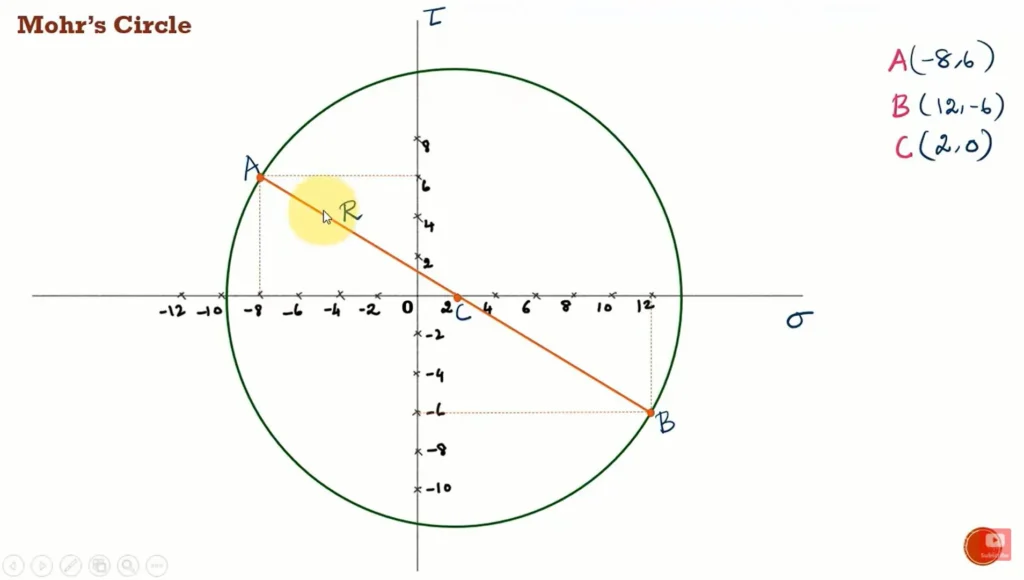
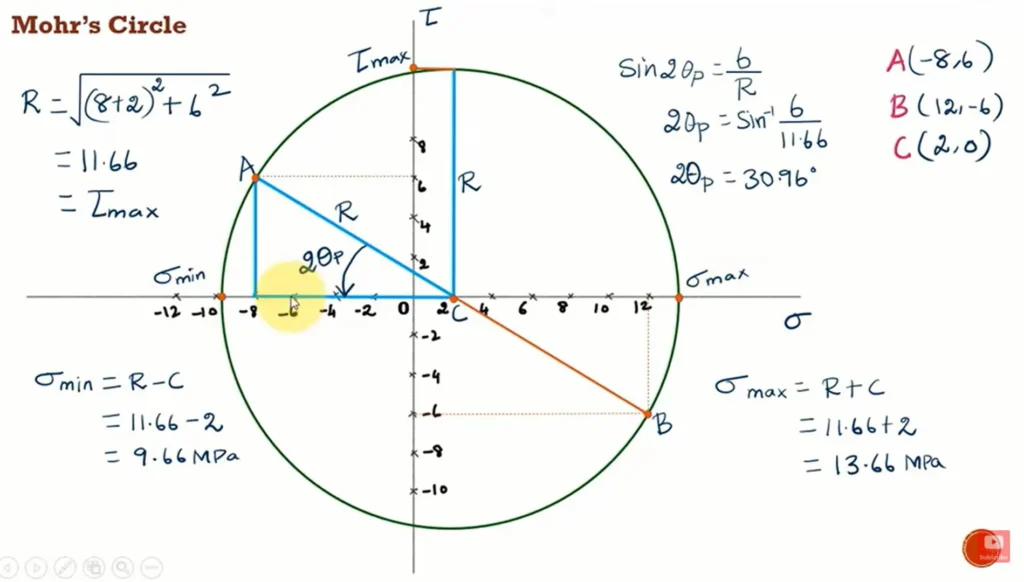
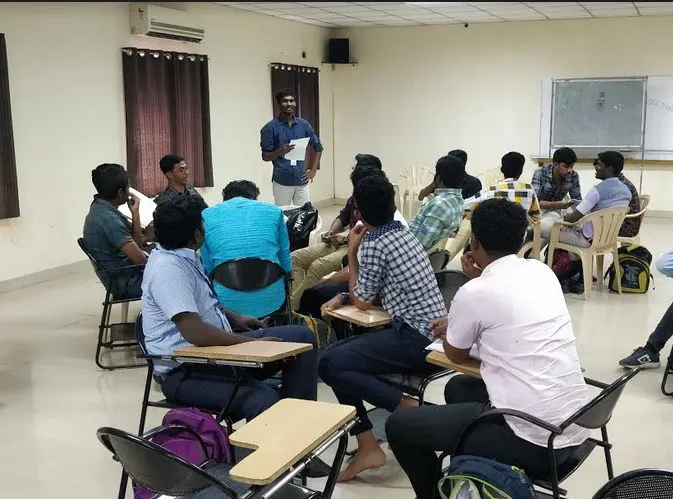
The concepts of Mohr’s circle are important in calculations of stress in solid bodies. In this lecture, the faculty introduced very lively explanation of this graphical method which can be easily understood by the students. This will enhance the students to remember and apply the concepts in a better way.

Subject Code and Name – 15ME64C PROJECT MANAGEMENT AND FINANCE

Description of activity
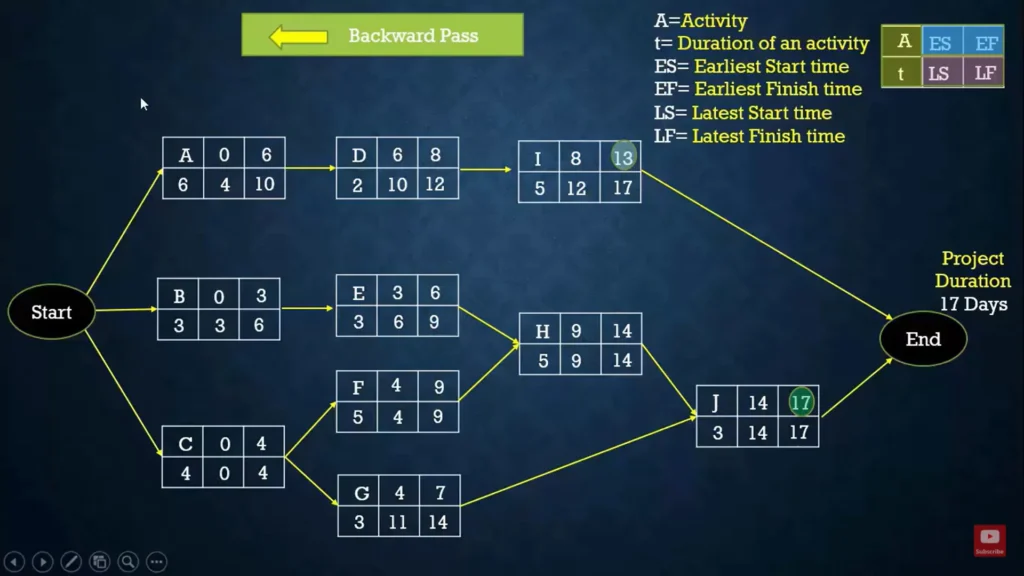
This video explains how to determine expected time from pessimistic time, most likely time and optimistic time and to construct a project network using graphical method. This will be helpful for the students to effectively plan the project works.

The content available at https://www.youtube.com/watch?v=zSpBYI1Rtsk

Dr. F. Michael Thomas Rex,
Assistant Professor (SG) / Mechanical

Subject Code and Name15SH16C ENGINEERING GRAPHICS

Description of activity
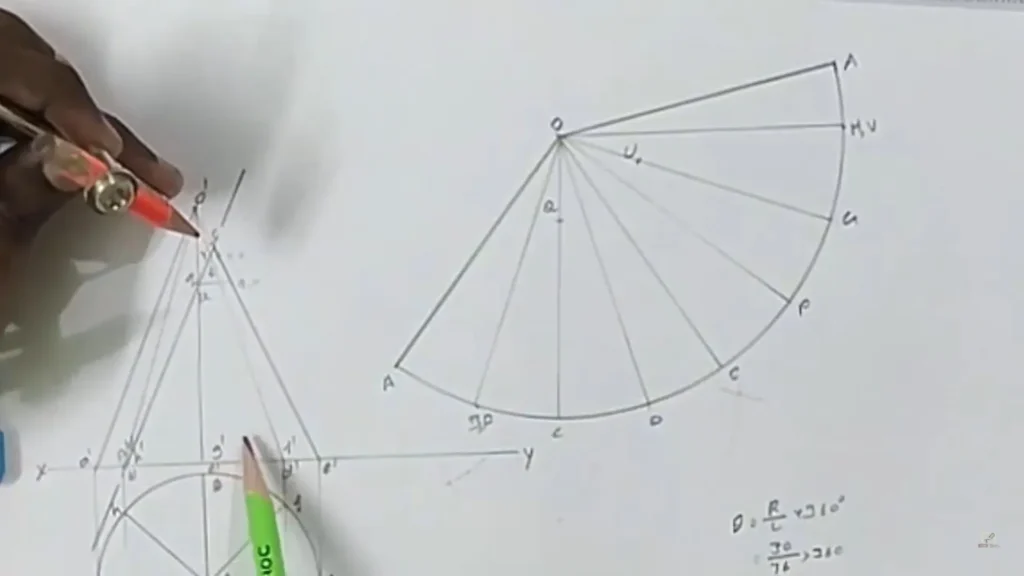
In this subject, the drawing procedure for isometric projections, projection of solids, planes, development of surfaces etc., were taught with the help of video lecture animation. The students were taught how to draw the engineering drawings in a simple manner.

The content available at https://www.youtube.com/watch?v=0Em4-l2XnHA

Mr. Prince Abraham,
Assistant Professor / Mechanical

2.DEMONSTRATION BASED CONCEPT DELIVERY

Subject Code and Name15ME52C Dynamics of Machinery

Description of activity
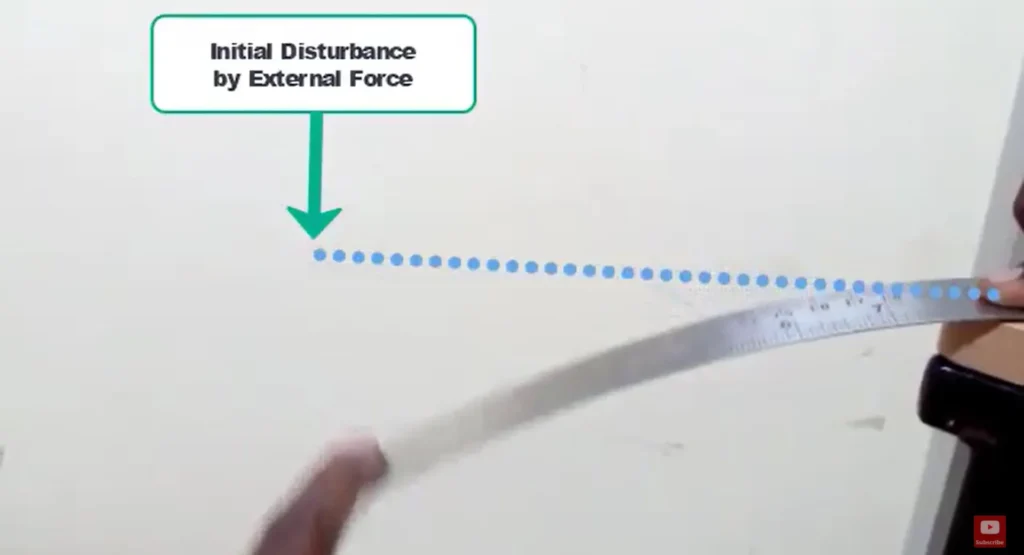
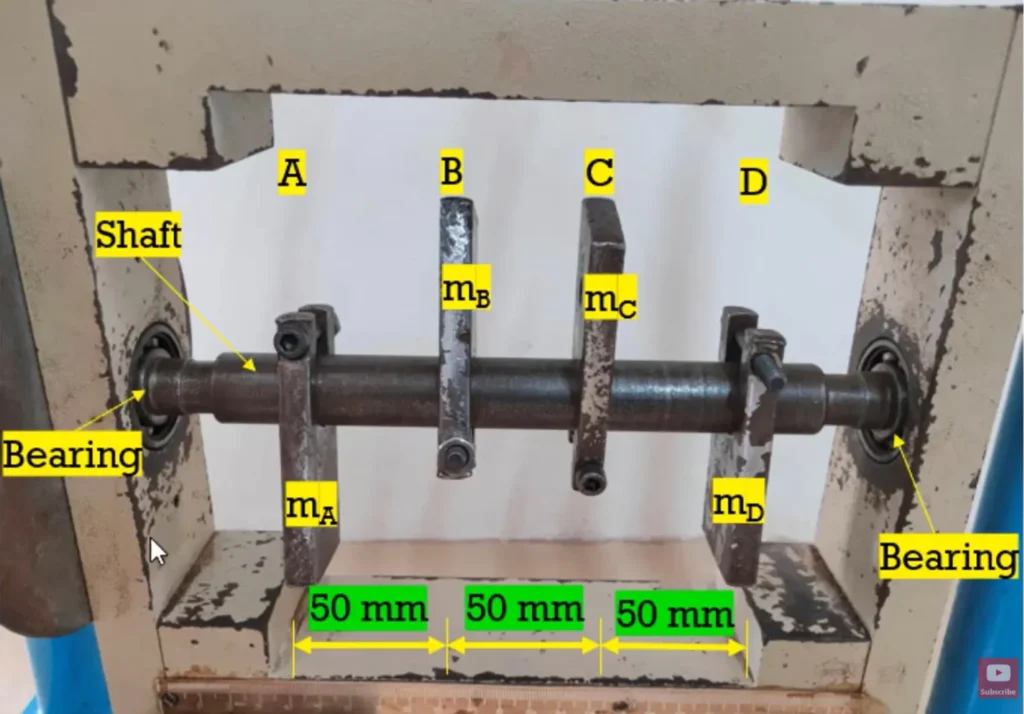
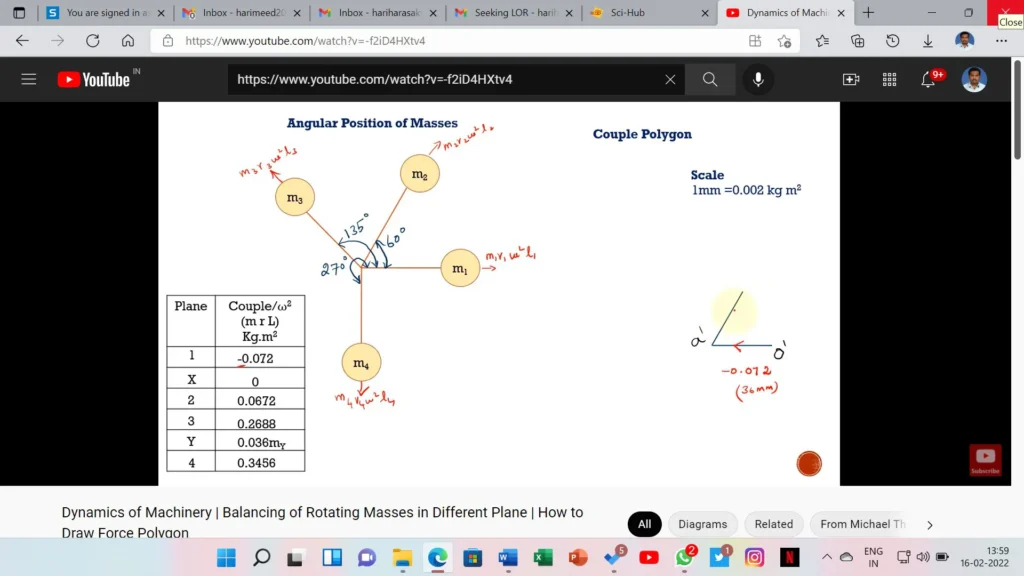
The concept of free vibration was demonstrated with simple gadgets available. The faculty explained the concepts of balancing the rotating masses using graphics. The method of drawing force polygon and couple polygon which is essential to control the vibration in systems. The graphical explanation of this method will enhance the understanding of the concepts. The same method was extended in laboratory course as well.

Dr. F. Michael Thomas Rex,
Assistant Professor (SG) / Mechanical

Subject Code and Name – 15SH16C ENGINEERING GRAPHICS

Description of activity
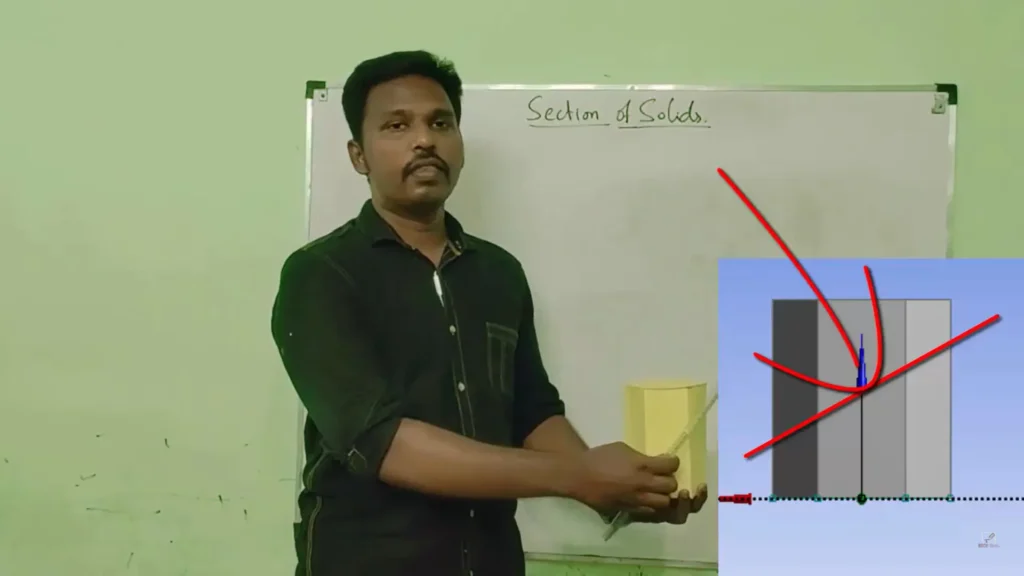
In this subject, the concept of section of solids is explained with the help of a physical model and virtual model by the faculty along with graphical illustrations.

Mr. Prince Abraham,
Assistant Professor / Mechanical


3.PROJECT BASED LEARNING

Subject Code and Name – 15ME09E WIND ENERGY (ELECTIVE)

Description of activity
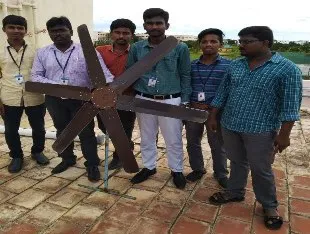
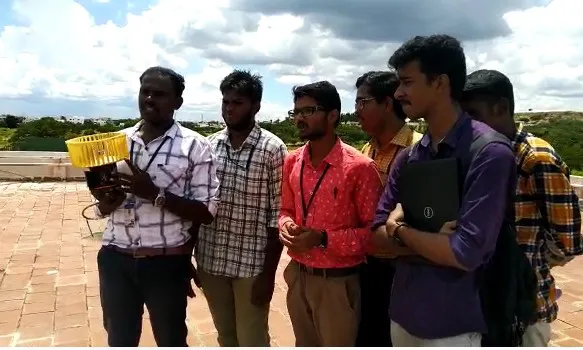
Initially the skills needed for the preparation of working model of wind turbine were identified as 1. Design Skills, 2. Computational Skills, 3. Knowledge of Materials, 4. Fabrication Skills. The students were given with the own choice of selecting the type of wind turbines (Horizontal / Vertical) and materials for the same. The students were asked to submit and present their working model of wind turbine with minimum output like lighting a bulb. The assessment was done in the following categories: 1. Wind turbine data analysis, 2. Knowledge on Aerodynamics, 3. Selection of Materials, 4. Knowledge of Wind Farms, 5. Economics of Wind Turbine.

Dr. S. Iyahraja
Associate Professor / Mechanical


4.SIMULATION AND ANALYSIS SOFTWARE INTEGRATED TEACHING IN DESIGN

Subject Code and Name15ME24L CDIO APPROACH IN PRODUCT DESIGN AND PROJECT MANAGEMENT – OCC

Description of activity
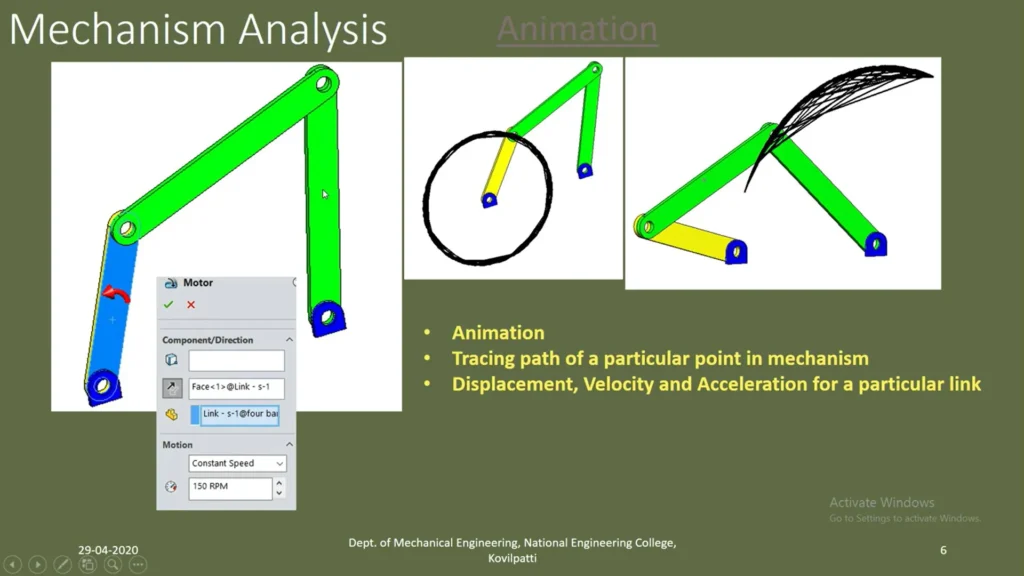
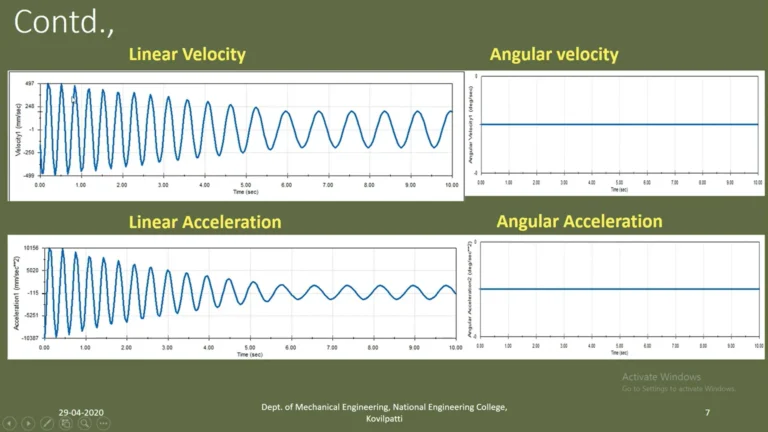
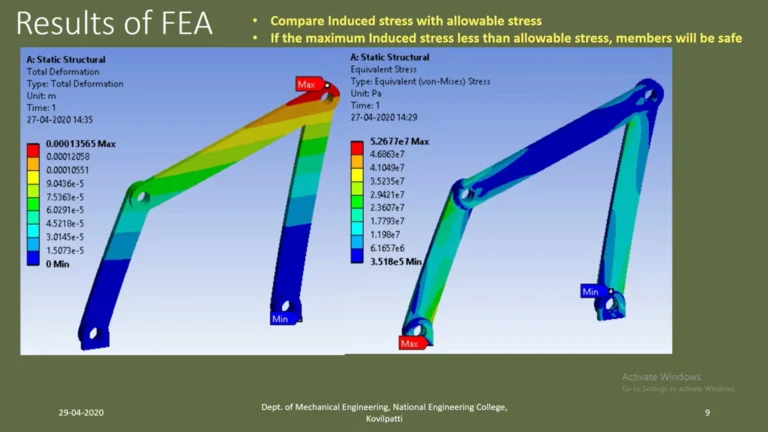
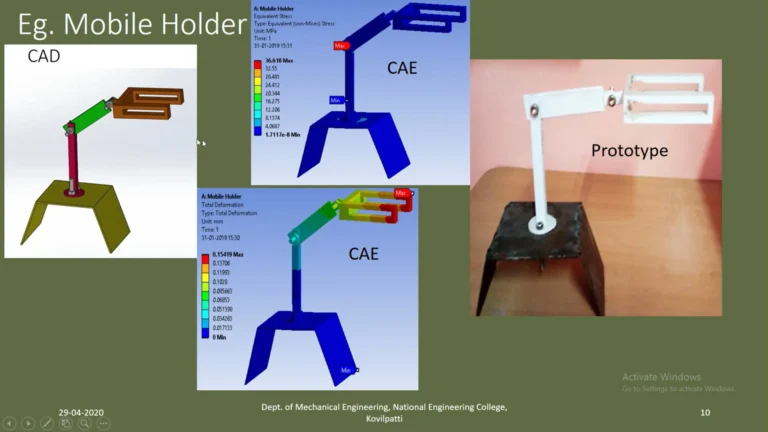
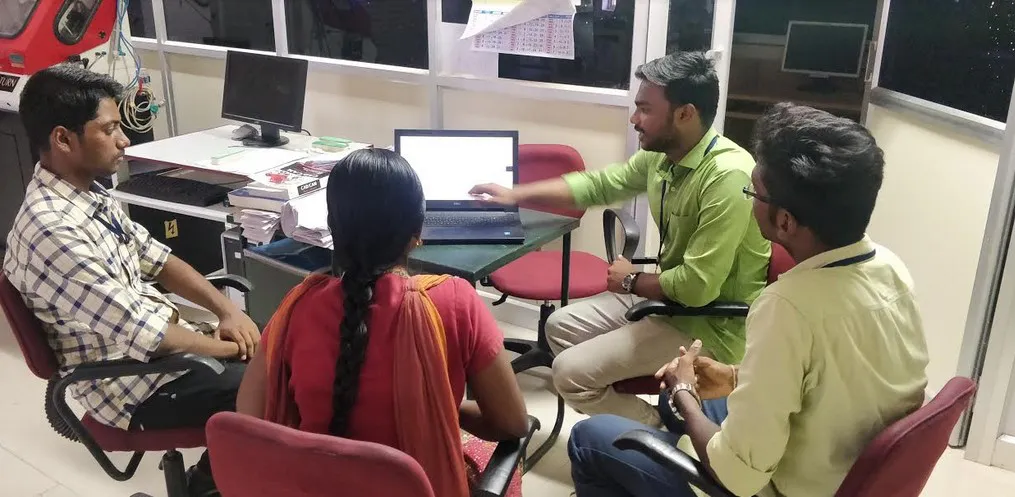
In this subject, the design concepts of a mechanism were taught with the help of software results. The students were taught how to use computer aided design and engineering tools to quickly model and analyze the ideas with the help of a simple four bar mechanism.


Dr. P. Harihara sakthi sudhan,
Assistant Professor (SG) / Mechanical


Subject Code and Name15ME67C COMPUTER AIDED ANALYSIS LABORATORY

Description of activity
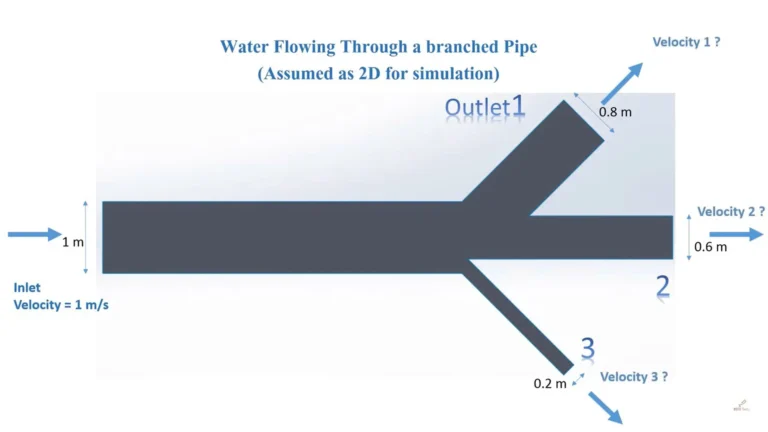
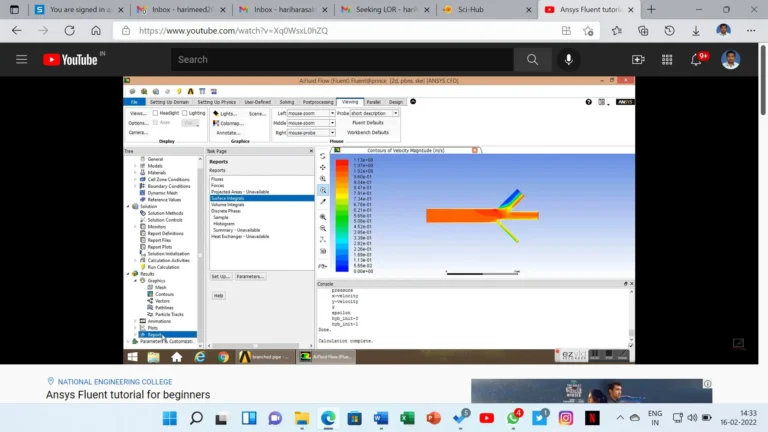
In this subject, a flow analysis is taught with the help of finite element software and how to create surface from edges & edge from points and Design Modelling using Ansys Workbench software were taught with the help of video lecture. The students were taught how to how to use computer aided design and engineering tools to quickly model and analyze.

The content available at

https://www.youtube.com/watch?v=OloQq2cYi6g

https://www.youtube.com/watch?v=Xq0WsxL0hZQ

Mr. Prince Abraham,
Assistant Professor / Mechanical

Subject Code and Name15ME68C SIMULATION LABORATORY

Description of activity
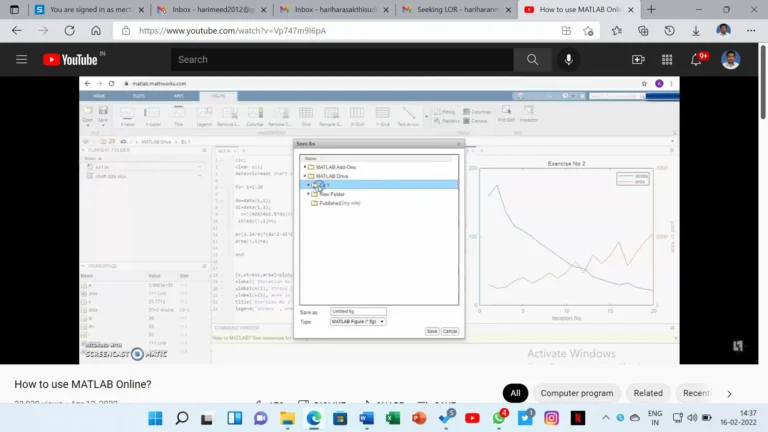
In this subject, the design and analysis of simple Mechanical and Thermal systems with the help of MATLAB. The students were taught how to use MATLAB online, and simulation procedure.

The content available at

https://www.youtube.com/watch?v=Vp747m9I6pA

Subject Code and Name15ME37C DRAFTING AND MODELLING LABORATORY

Description of activity
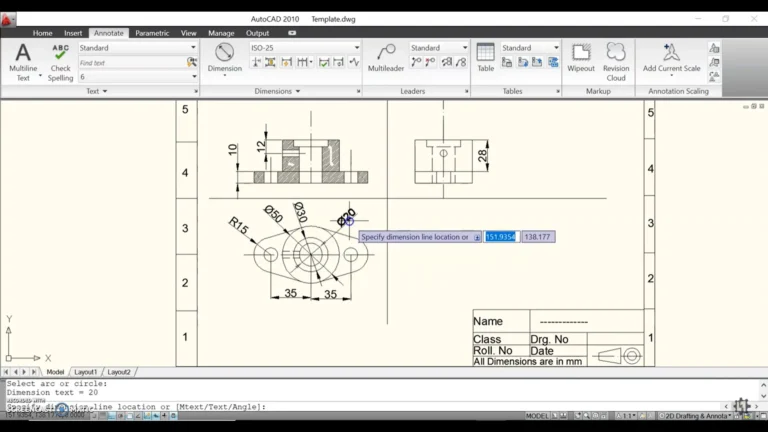
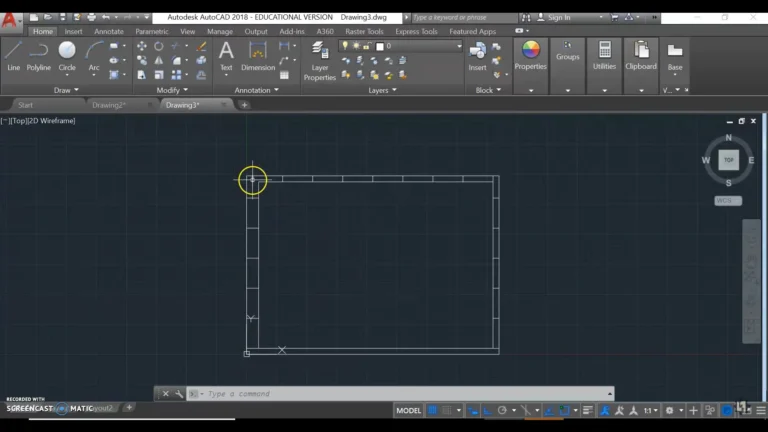
In this subject, how to perform 2D Drafting and 3D modelling creation and assembly of given machine components using AUTOCAD software.

The content available at

https://www.youtube.com/watch?v=_j_iZtTjQpA

https://www.youtube.com/watch?v=i0xyzVyb1m4

Mr. A. Andrews
Assistant Professor / Mechanical

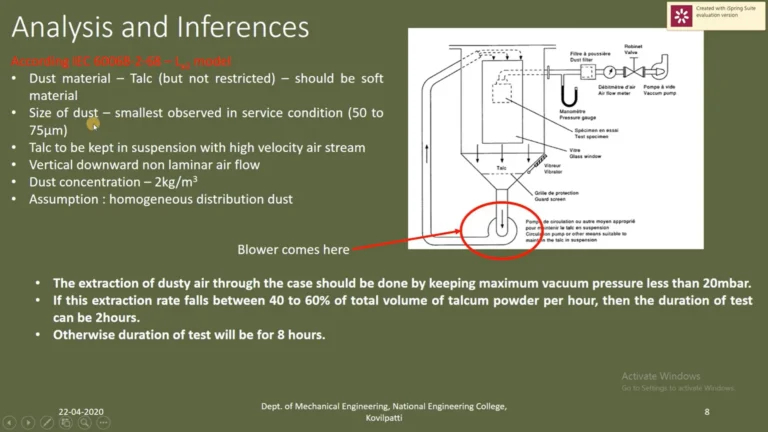
5.CONTEXT STUDY IN DESIGN USING A REAL TIME PROJECT DONE IN THE INSTITUTION

Subject Code and Name15ME24L CDIO APPROACH IN PRODUCT DESIGN AND PROJECT MANAGEMENT – OCC

Description of activity
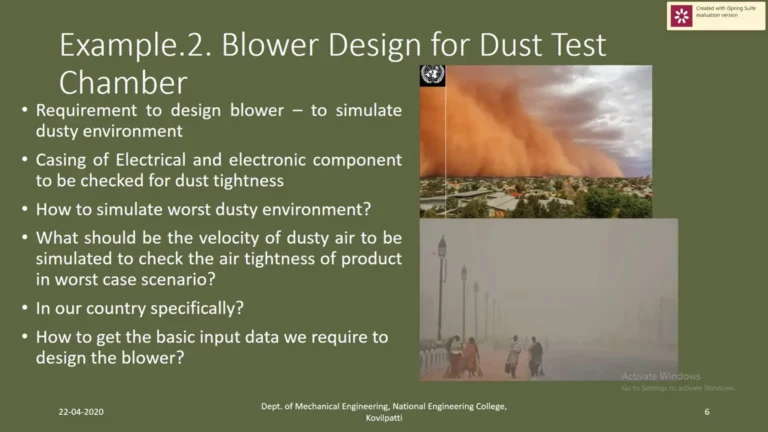
It is essential to understand the actual requirements of the environment where the product is going to serve. The concept of extracting the product design specification from the context was explained with the help of a real time design project done in our institution.

The content available at

https://www.youtube.com/watch?v=9VN-ClCfl44

Dr. P. Harihara sakthi sudhan,
Assistant Professor (SG) / Mechanical

6.ACTIVITY BASED LEARNING SYSTEM WITH REAL LIFE EXAMPLES

Subject Code and Name – 15EI46C FUNDAMENTALS OF THERMODYNAMICS AND FLUID MECHANICS

Description of activity
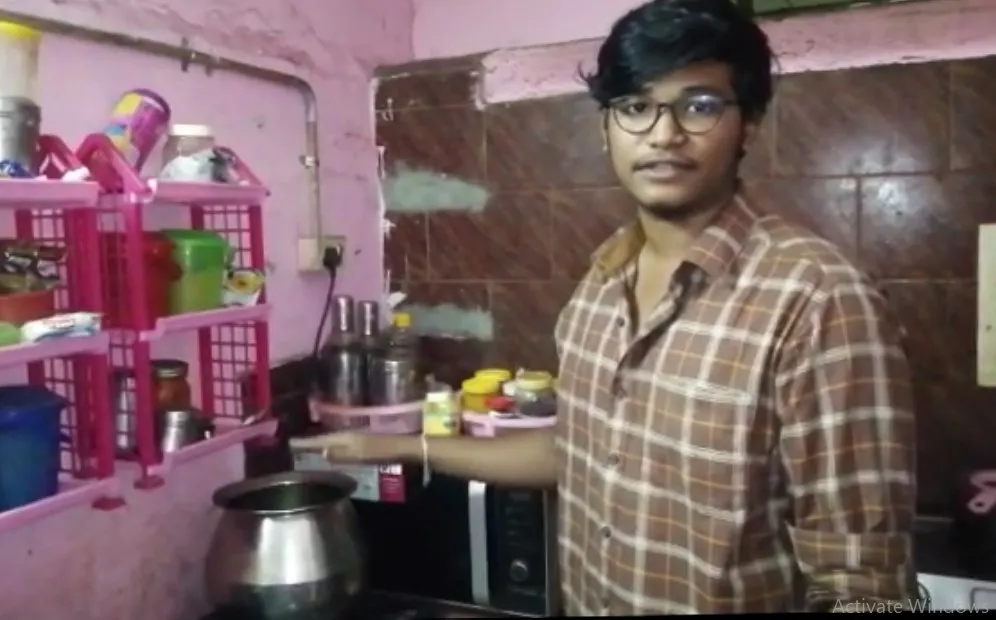
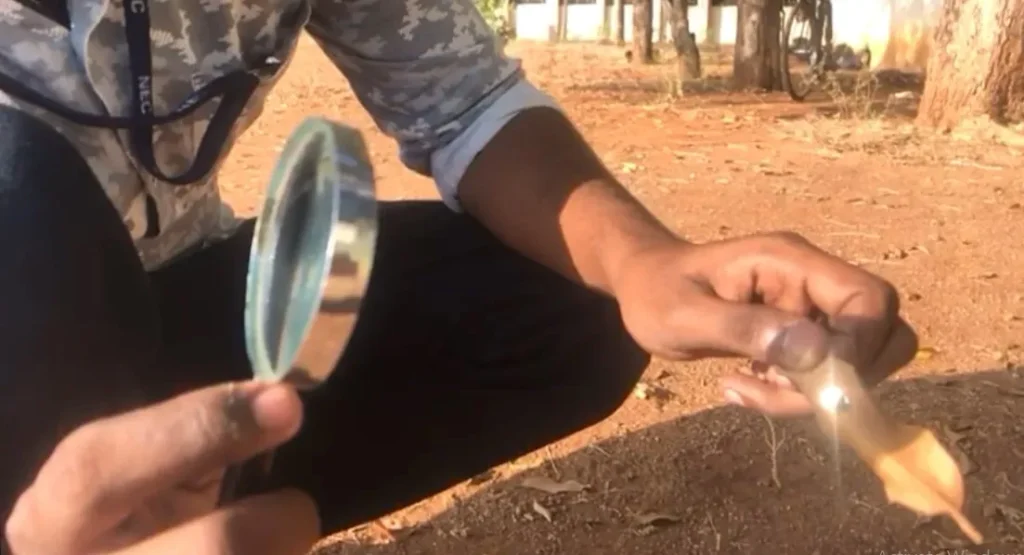
In this subject, the students are involved in activity based learning system. The students selected their own applications to demonstrate the different modes of heat transer. It encourages the students to express themselves in different ways.

The content available at

https://moodle.nec.edu.in/pluginfile.php/71822/assignsubmission_file/submission_files/29717/Heat%20transfer.mp4?forcedownload=1

https://moodle.nec.edu.in/pluginfile.php/71822/assignsubmission_file/submission_files/29687/VID-20200202-WA0005.mp4?forcedownload=1

Mr. N. Muthu Saravanan,
Assistant Professor / Mechanical

7.MARKETING BASED LEARNING WITH PRODUCT ADVERTISEMENT

Subject Code and Name – 15ME54C MARKETING MANAGEMENT – ELECTIVE

Description of activity
In this subject, Students are asked to summarize important concepts in today’s world. Advertisement has become a significant tool for marketing a product. Hence in Marketing Management subject, final year students are asked to advertise a product with comedy, action and drama.

Mr. C. Veera Ajay,
Assistant Professor / Mechanical

8. LEARNING WITH FIELD STUDY

Subject Code and Name15ME11E/15EE07E SOLAR PHOTOVOLTAIC FUNDAMENTALS AND APPLICATIONS (ELECTIVE)

Description of activity

Hands on training for the design of PV systems through the field visit to the PV systems in our campus. Groups were formed comprising a maximum of four members per group with distribution of students with different levels of knowledge. The students were instructed to forecast the demand for a particular application and design grid tied/standalone PV systems using PVsyst. They were instructed to submit the design of PV systems for different capacities with various PV technologies along with their annual performance predictions. 50% of weightage for the assessment has been provided apart from the internal assessment test.

Dr. P. Ramanan,
Assistant Professor (SG) / Mechanical.

(A SHOWCASE OF STUDENT CREATIVITY AND APPLICATION)

INTRODUCTION

The Department of Mechanical Engineering adopts an innovative and application-driven pedagogy to bridge the gap between theory and practical implementation. As part of the course 23ME36C – Kinematics of Machinery for Third Semester B.E. Mechanical Engineering, the experiential component was executed through student-designed working models based on real-world engineering applications.

This initiative aimed to reinforce classroom learning by encouraging students to design, analyze, fabricate, and validate mechanisms using kinematic principles. Working in teams, students transformed theoretical concepts—such as cams, gear trains, linkages, and motion transmission mechanisms—into functional prototypes.

The activity nurtured creativity, problem-solving, communication, and teamwork while ensuring strong alignment with the Outcome-Based Education (OBE) framework. The successful completion of these projects evidences the attainment of experiential Course Outcomes (CO6–CO9), demonstrating both technical proficiency and practical engineering competence among the students.

COURSE OUTCOMES

Upon the successful completion of the course, the student will be able to

Theory Component

CO1: Discuss the fundamental concepts of the simple mechanisms.

CO2: Determine velocity and acceleration of any point on a link in simple mechanisms.

CO3: Draw the cam profile for different types of follower and motion requirements.

CO4: Apply gear and gear train fundamentals to select suitable components for specific applications.

CO5: Apply friction concepts to design clutches and brakes.

Experiential Component

CO6: Design a mechanism for a specific engineering application.

CO7: Analyse and Validate the mechanisms through kinematic principles.

CO8: Implement theoretical designs into tangible prototypes.

CO9: Collaborate and communicate effectively as a member of a team for proficient problemsolving.

OBJECTIVES OF THE PROJECT ACTIVITY

  • To enhance students’ understanding of motion mechanisms by applying theoretical principles of Kinematics to real-time working models.

  • To encourage creativity, innovation, and engineering thinking through mechanism design and model development.

  • To promote hands-on learning and improve problem-solving skills by simulating, fabricating, and testing mechanical linkages and transmission systems.

  • To develop teamwork, project planning, and communication skills through collaborative project execution.

  • To assess student performance using OBE parameters through demonstration, documentation, and evaluation of the designed mechanisms.

LIST OF PROJECTS WITH PHOTOGRAPHS

Title of the Project

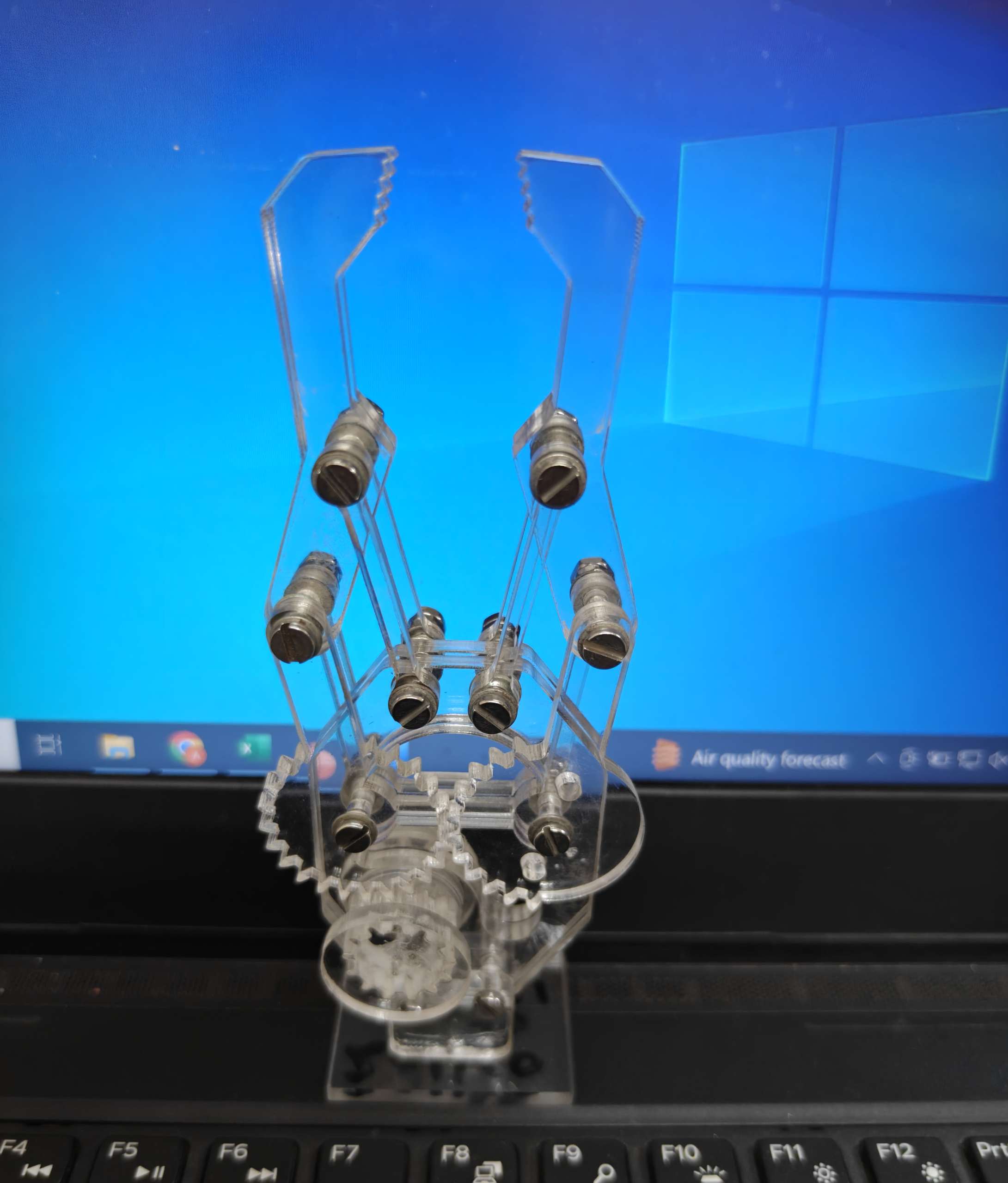
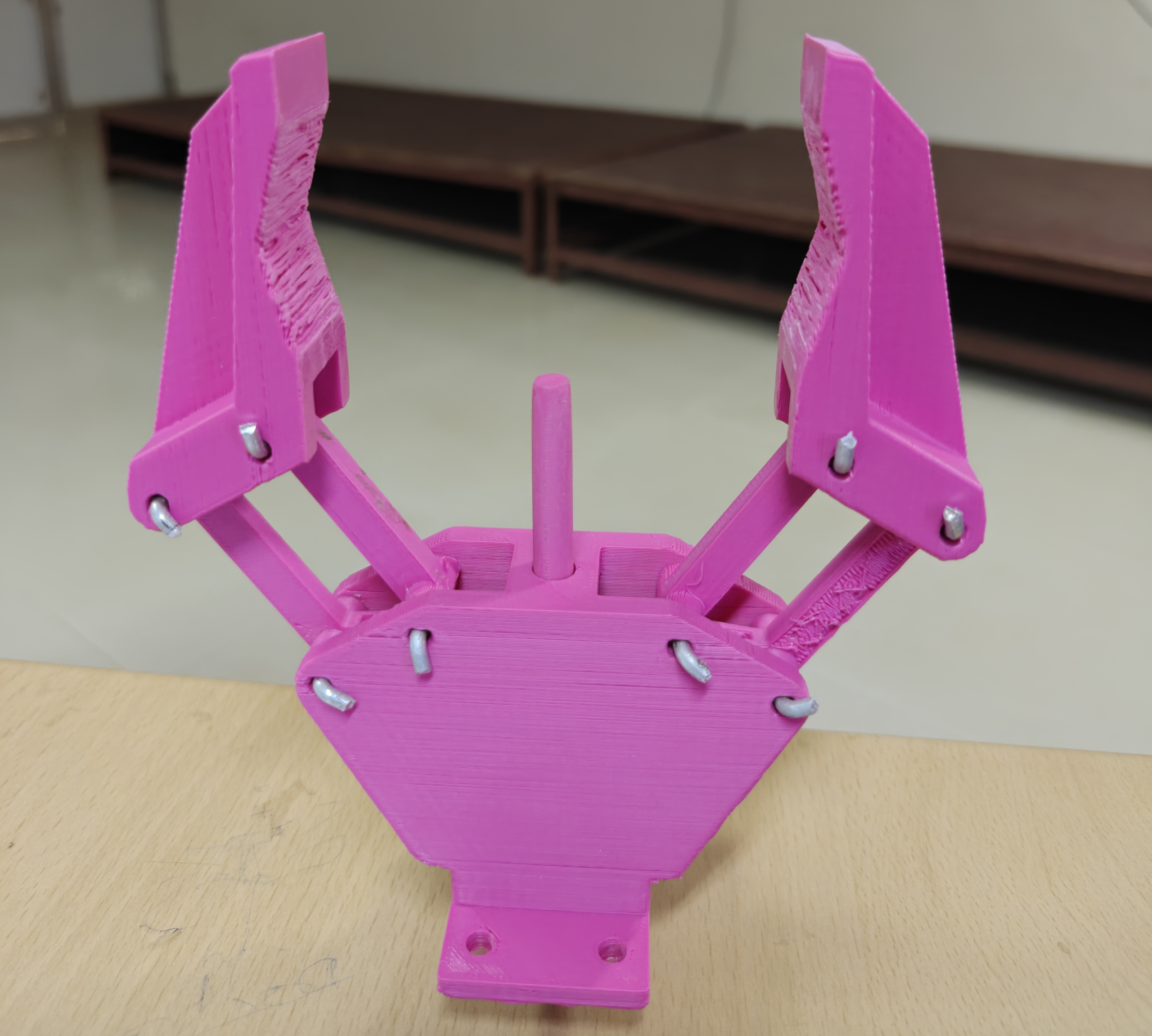
Robotic Gripper

Name of the Students

S A Shibiga (24114030)

C Maria Stelina Fernando(24114031)

Scan the QR Code for Mechanism Simulation


Title of the Project

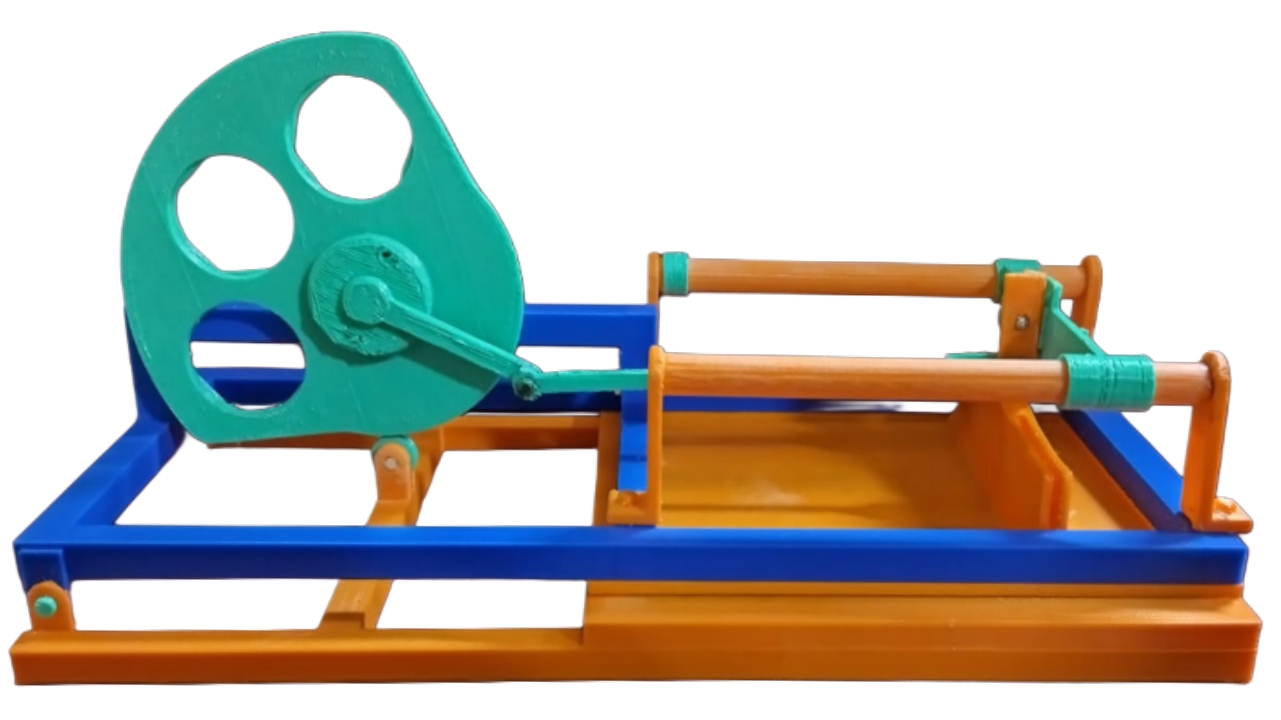
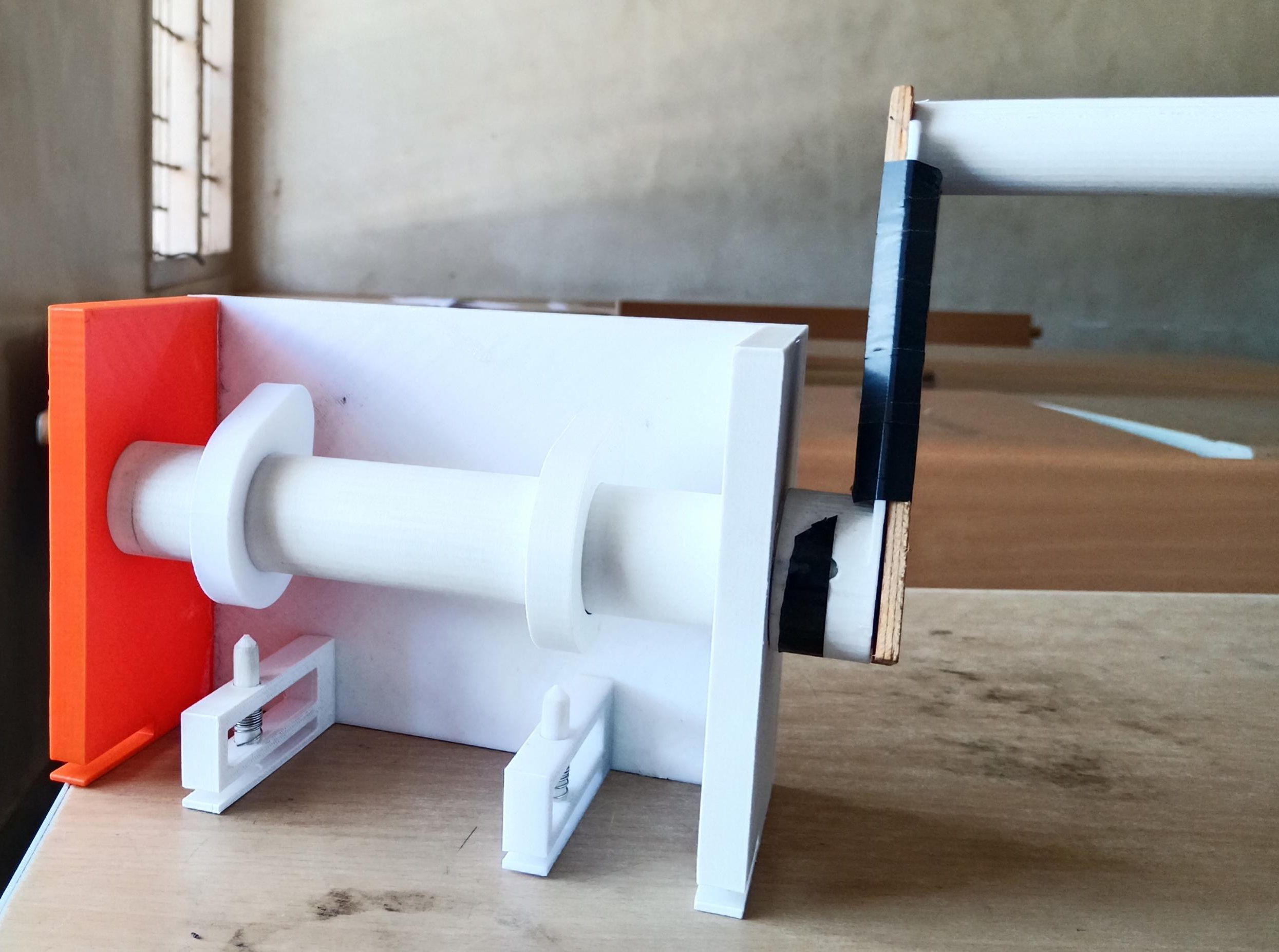
Mini Screen-Printing Machine Using Slider Crank Mechanism

Name of the Students

S.Gnana Murugan-24114043

M.Aathivel-24114051

V.Jeffery samuel-24114003

Scan the QR Code for Mechanism Simulation

Title of the Project

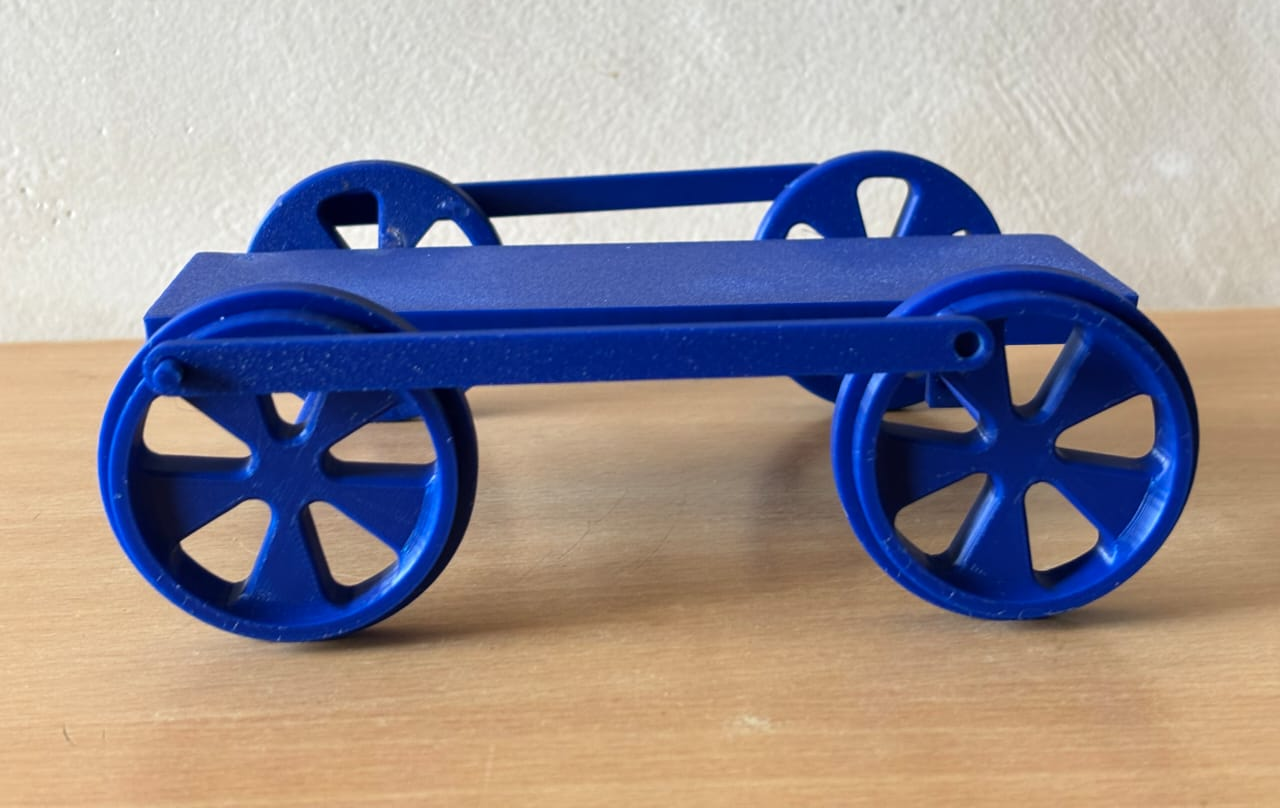
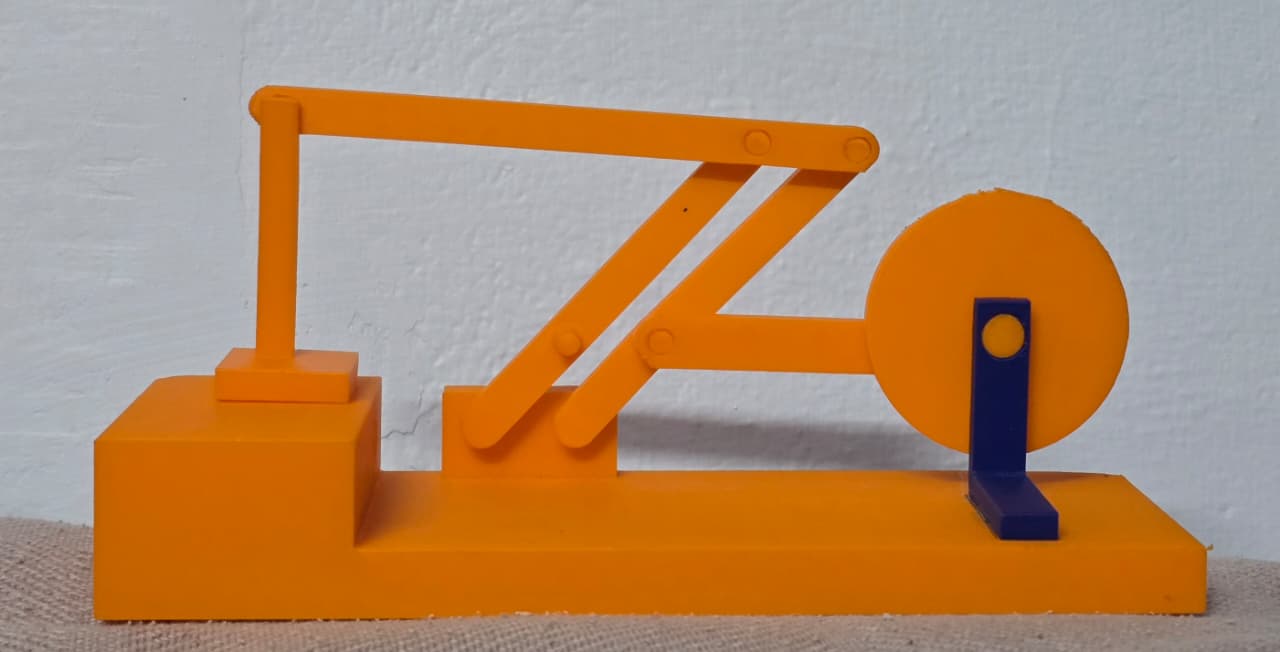
Four Bar Loco Motive Wheel

Name of the Students

Mathanraj S – 24114034

Sudalai J– 24114040

Makesh raja E – 24114055

Scan the QR Code for Mechanism Simulation

Title of the Project

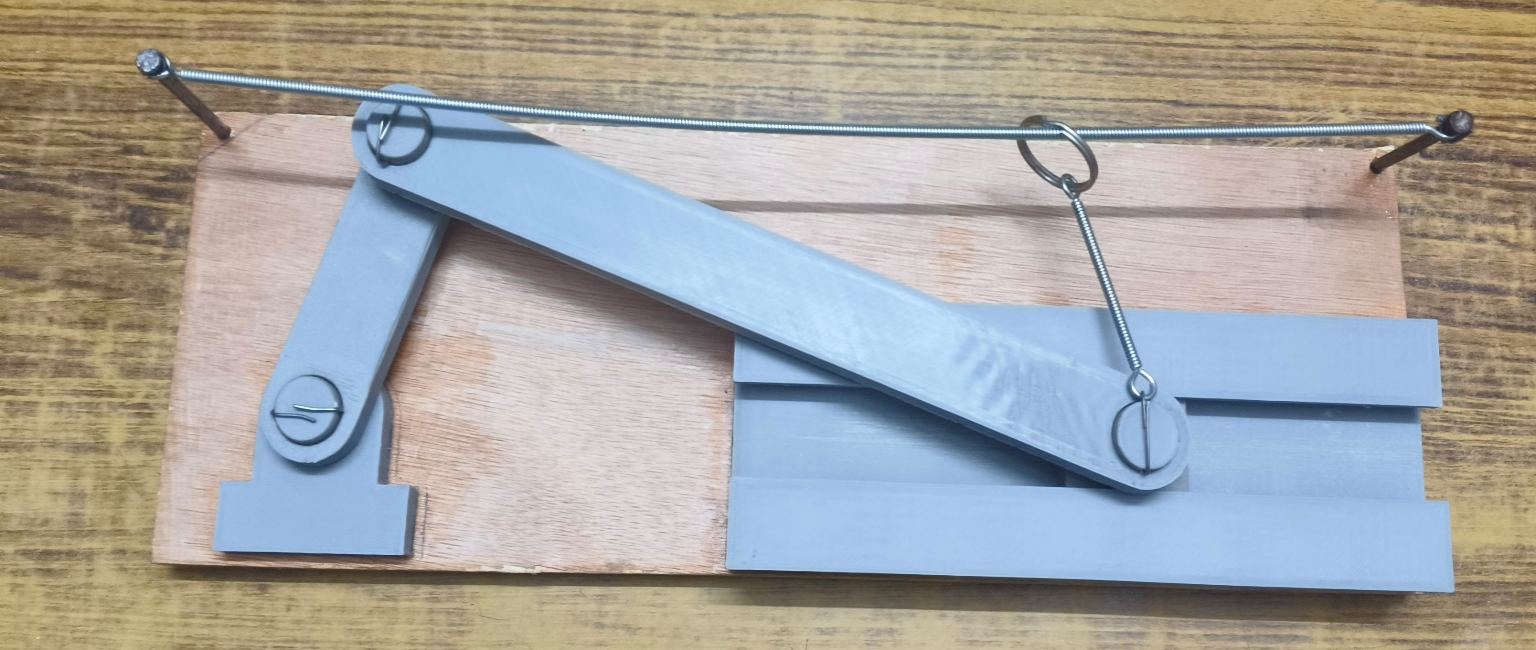
Paper Cutting Machine Using Slider Crank Mechanism

Name of the Students

Subramanyan P (24114016)

Renil Jackson J (241140138)

Santhosh Kumar S (24114060)

Scan the QR Code for Mechanism Simulation

Title of the Project

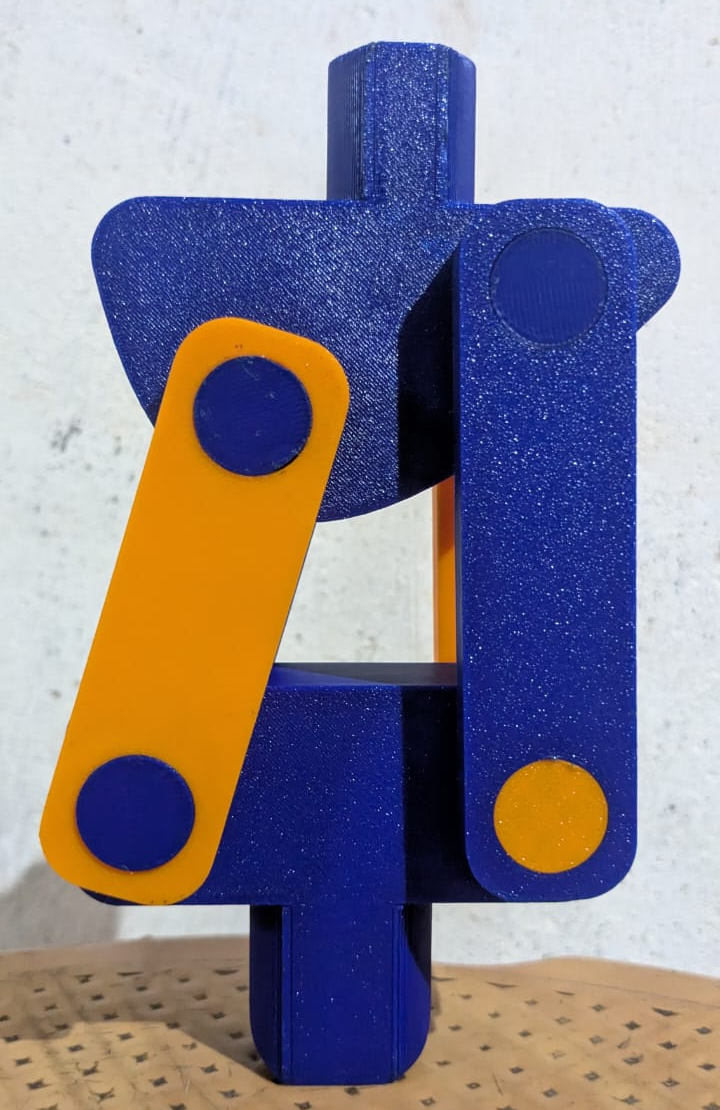
Prosthetic Knee Joint

Name of the Students

Nagaraj P (24114008)

Santhosh S(24114023)

Blessing Samuel Paul C(24114027)

Scan the QR Code for Mechanism Simulation

Title of the Project

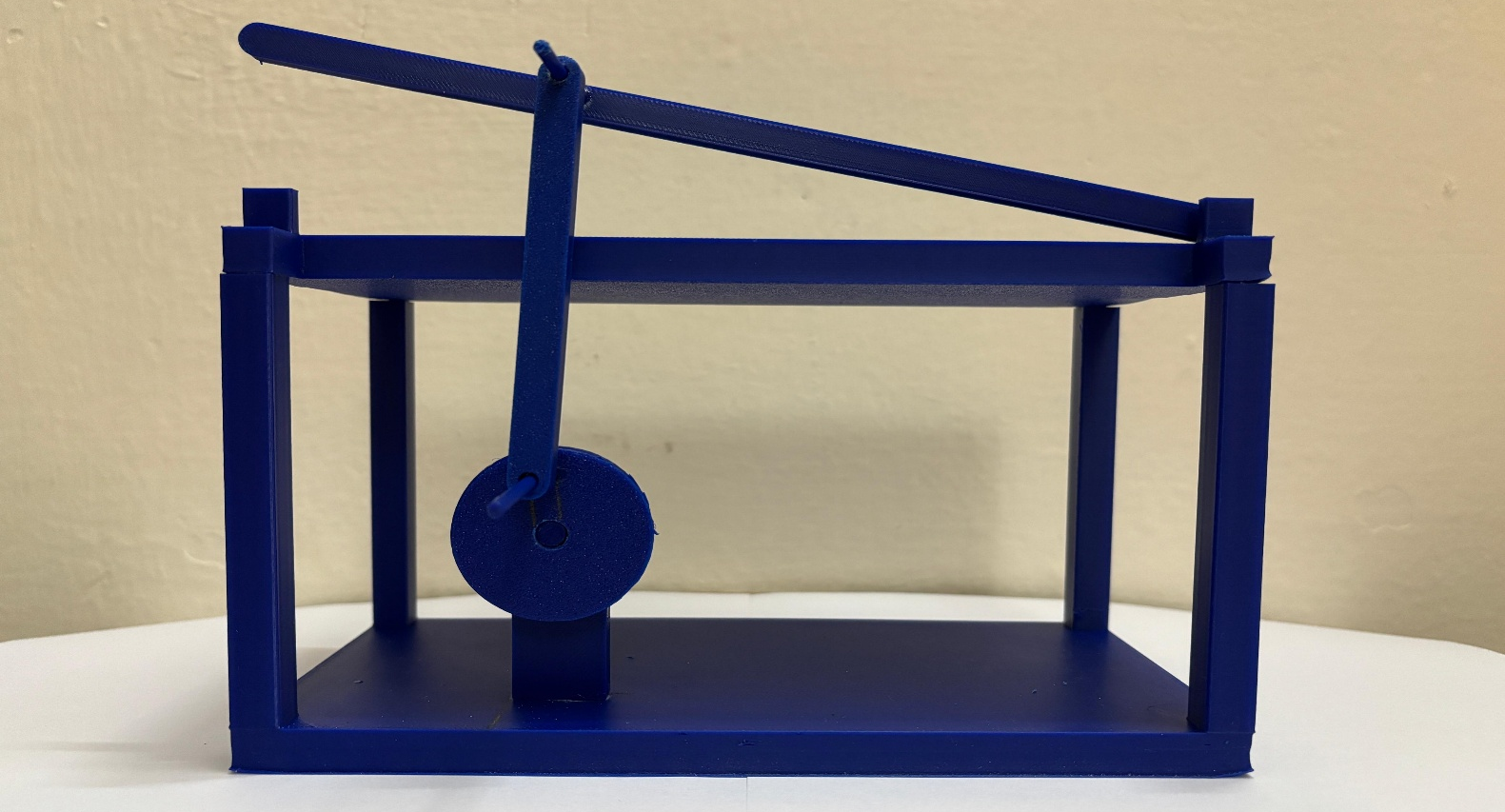
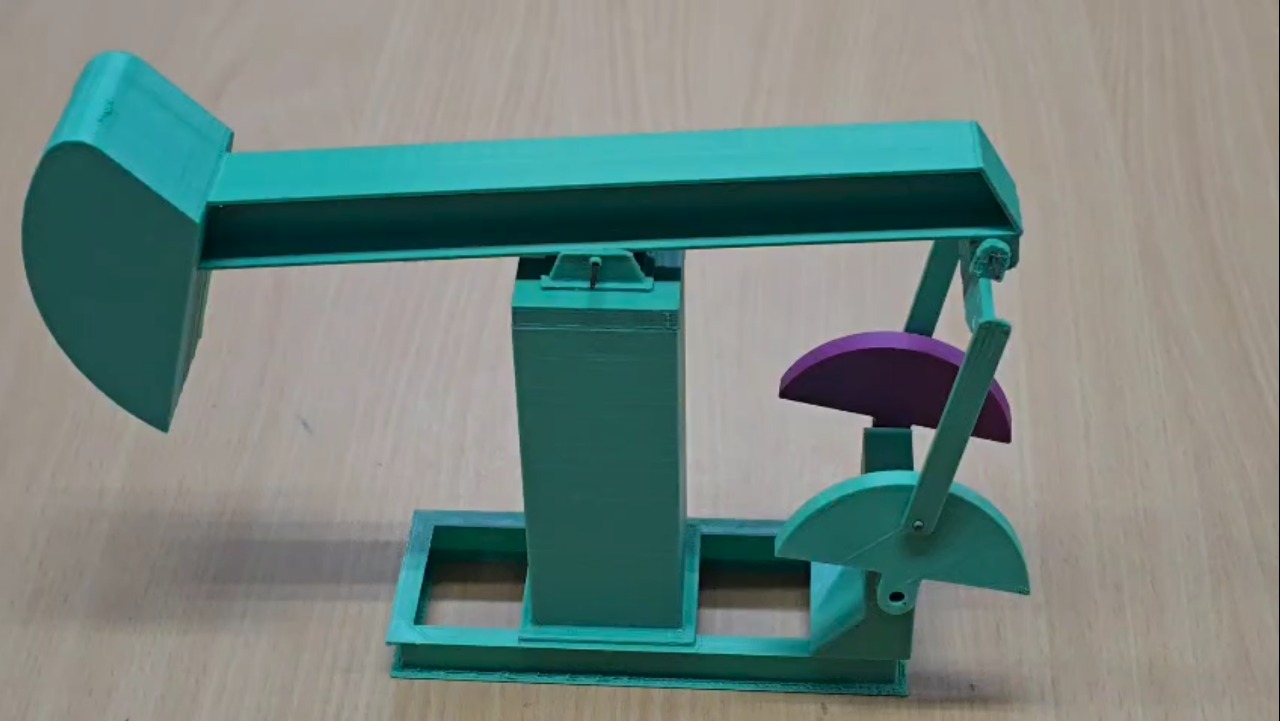
Oil Pump Jack using Four Bar Mechanism

Name of the Students

Nareshkumar S (24114403)

Parani dharan S (24114061)

Nadesan L (24114045)

Akash S (24114407)

Scan the QR Code for Mechanism Simulation

Title of the Project

Automatic Stamping Machine using Crank Rocker Mechanism

Name of the Students

Lokesh M – 24114044

Kanish Kumar M R – 24114046

Sankar M – 24114047

Scan the QR Code for Mechanism Simulation

Title of the Project

Mechanism For Opening and Closing of the Screen

Name of the Students

Karthik Subramanian S (24114014)

Nithish A (24114010)

Daniel Samraj C (24114035)

Scan the QR Code for Mechanism Simulation

Title of the Project

Punching Machine Using Cam Mechanism

Name of the Students

R Gurusivabalan – 24114024

Balaji B – 24114032

P Senthil Kumaran – 24114033

Scan the QR Code for Mechanism Simulation

Title of the Project

Robot Gripper Mechanism

Name of the Students

Mari Raja N.S-24114049

Mohamed Safik Fazil S -24114056

Harihara Suthan M -24114063

Scan the QR Code for Mechanism Simulation

OUTCOMES ACHIEVED

  • Students demonstrated strong conceptual understanding of motion mechanisms by successfully designing and fabricating working models.

  • Students gained hands-on experience with fabrication tools, linkages, and transmission systems, bridging the gap between theory and practice.

  • Collaborative teamwork enhanced communication and planning skills, reflecting real-time engineering project environments.

  • The activity strengthened Outcome-Based Education (OBE) mapping, showing improvement in course outcomes related to application, innovation, and experimentation.

  • Students exhibited creativity and an engineering mindset, highlighting their capability to develop functional solutions for practical applications.

  • The project exposure increased confidence, curiosity, and motivation to pursue higher-level engineering challenges and research.

COURSE INSTRUCTORS

Dr. Kathiresan M.

Professor/ Mechanical Engineering

Dr. Andrews A.

Asst. Prof. (Sr. Gr.)/ Mechanical Engineering