
 Controller Of Examinations
Subject Code & Subject Name | : | 23IT44C & Design and Analysis of Algorithms |
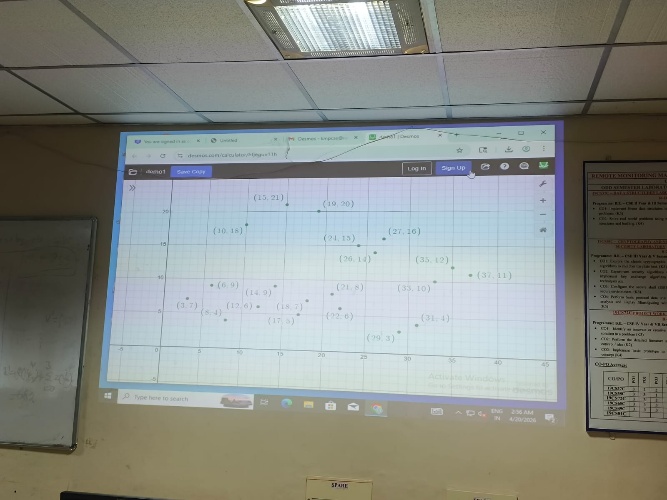
Teaching Methodology | : | Closest Pair of Points – Simulation Tool |
No. of COs Covered: | : | CO2 |
Name of the Course Coordinator(s) | Ms.N.Gowthami, AP(SG)/IT | |
Name of a Course Instructor(s) | : | Ms.N.Gowthami, AP(SG)/IT Ms.M.Manimegalai, AP(SG)/IT |
Course Outcome(s):
CO2: analyze algorithmic design using divide and conquer/greedy approach to solve complex problems.
Description of the Activity:
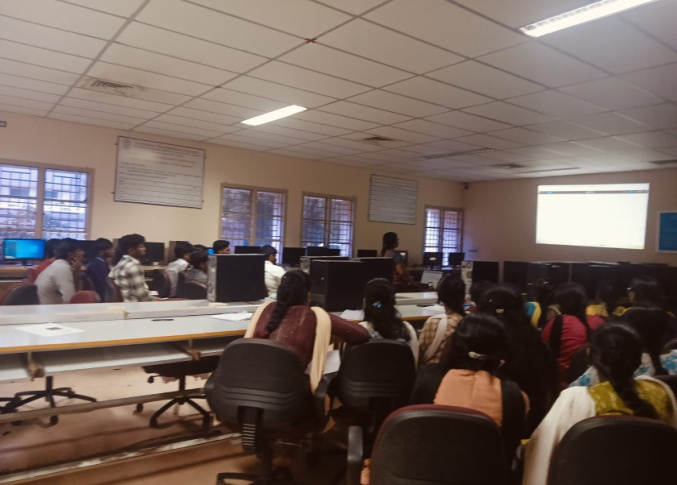
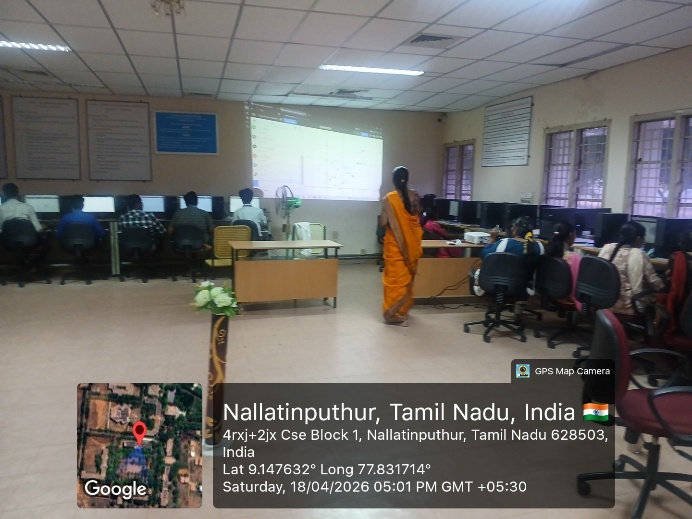
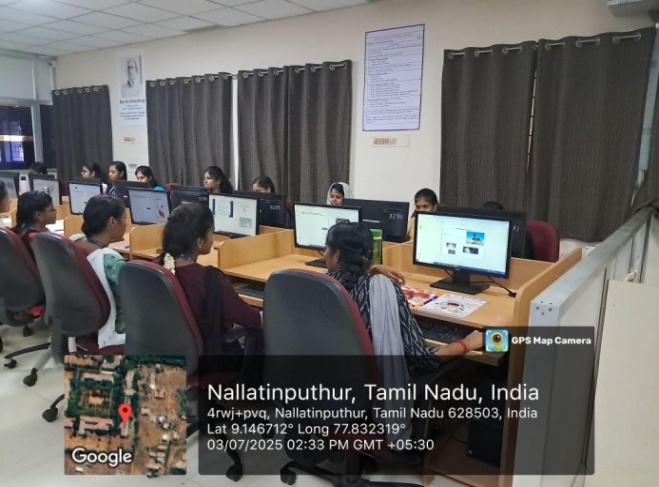
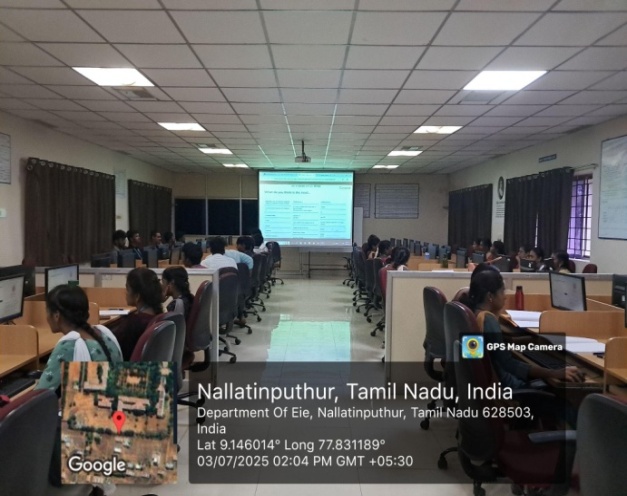
Students will use the interactive features of the Desmos Graphing Calculator to understand Closest Pair of Points by visualizing a set of points on a 2D plane and identify the closest pair among them. By dynamically adjusting point positions using sliders, students can observe how distances between points change and how the closest pair is determined.
Objective:
The primary objective of this Virtual Lab is
To understand the concept of the Closest Pair of Points problem in computational geometry.
To visualize Euclidean distance between points in a 2D plane.
To analyze how distance varies with point movement.
To develop intuition for brute-force and optimized approaches.
Procedure:
Introduce students to the Desmos interface (points, tables, sliders).
Students plot multiple points using coordinates or a table.
Students manually compute distances between pairs using the distance formula in Desmos.
Use expressions to calculate distances dynamically between selected points.
Highlight the minimum distance and identify the closest pair.
Use sliders to move points and observe how the closest pair changes in real time.
Encourage students to compare manual observation vs algorithmic thinking.
Activity Task
Plot at least 5–8 points.
Compute all pairwise distances.
Identify the closest pair visually and mathematically.
Modify one point and observe changes in the closest pair.
End-to-End Journey: INDUSTRIAL CAPSTONE MICRO PROJECT
Subject Code and Name: 23CS55C / 23IT52C & Artificial Intelligence
Description of Activity:
The Industrial Capstone Micro Project activity enables students to apply Artificial Intelligence concepts to solve real-world industry-based problems. Each student team identifies a practical issue faced in domains such as environmental sustainability, healthcare monitoring, smart systems, automation, or data analytics provided by TCS. Based on the identified problem, teams design and develop AI-driven solutions using modern tools, frameworks, and platforms.
Students work collaboratively to define the problem statement, gather or simulate datasets, build AI models or intelligent agents, evaluate system performance, and present the final solution. The activity bridges theoretical learning with practical implementation, helping students gain hands-on experience aligned with real industrial expectations.
Content Available At : https://drive.google.com/file/d/1KJ4uZDhZnqGDkJkMwgQLLikcYQ2uZ7Kw/view?usp=sharing
Course Handled by :
Dr.V.Gomathi, Prof & Head/CSE, Ms.R.Navedha Evanjalin, AP/CSE, Ms.A.Lincy,AP/CSE, Ms.R.Suguna, AP/IT, Ms.C.Ajitha, AP/IT
End-to-End Journey: DRAW AND LEARN USING CURIPOD
Subject Code and Name: 23CS55C / 23IT52C & Artificial Intelligence
Description of Activity:
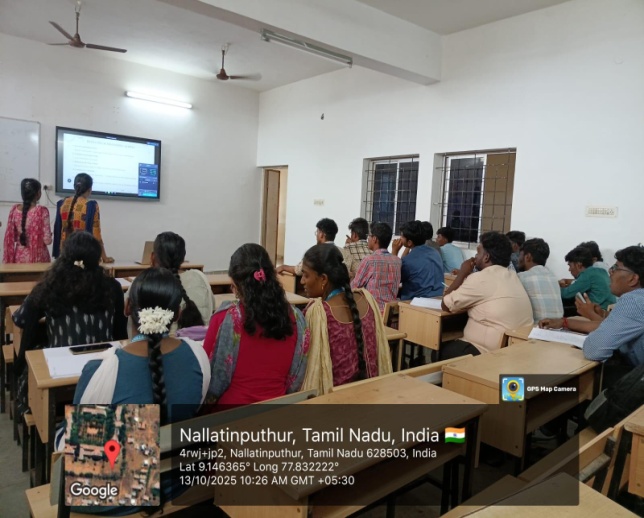
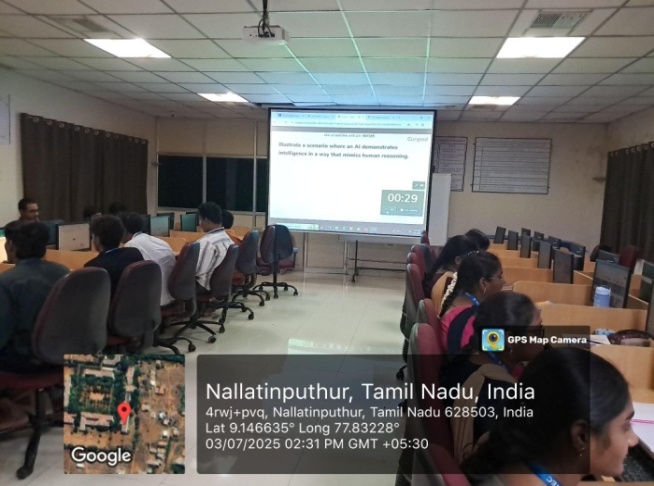
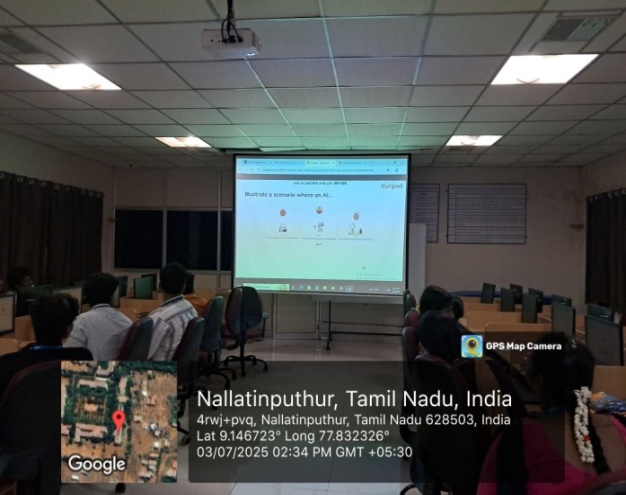
Each student was asked to draw an intelligent agent in Curipod(that best describes its activity) and voting feedback was asked to rate the best drawing that describes an intelligent agent. The students actively participated in the drawing activity expressing their innovation and creativity and provided rating feedback of other students drawing. The students learnt the characteristics of intelligent agents which is not only mimicking a human activity but also beyond human intelligence.
Content Available At : https://drive.google.com/file/d/1KJ4uZDhZnqGDkJkMwgQLLikcYQ2uZ7Kw/view?usp=sharing
https://drive.google.com/file/d/1tOTEM3RnrQpV528wZw9gtABQLGFdNxLP/view?usp=sharing
Course Handled by :
Dr.V.Gomathi, Prof & Head/CSE, Ms.R.Navedha Evanjalin, AP/CSE, Ms.A.Lincy,AP/CSE, Ms.R.Suguna, AP/IT, Ms.C.Ajitha, AP/IT
End-to-End Journey: SIMULATION AND ANALYSIS INTEGRATED LEARNING – OPTIMIZATION ALGORITHMS USING VLABS
Subject Code and Name: 23CS55C / 23IT52C & Artificial Intelligence
Description of Activity:
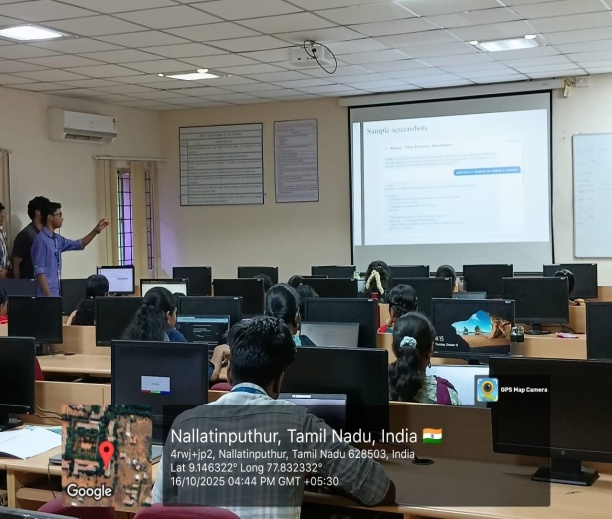
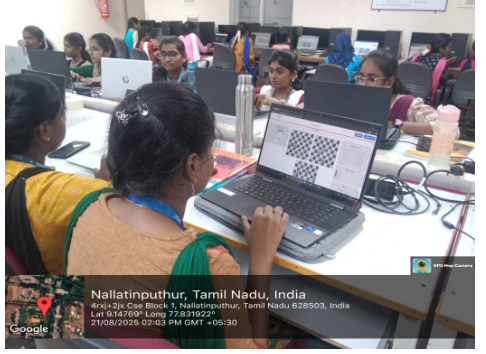
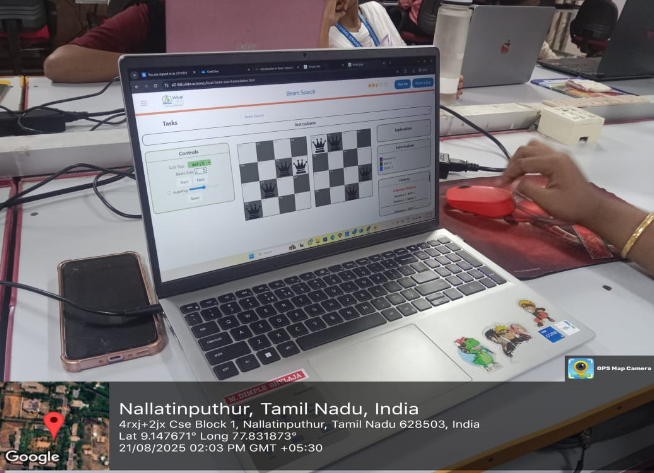
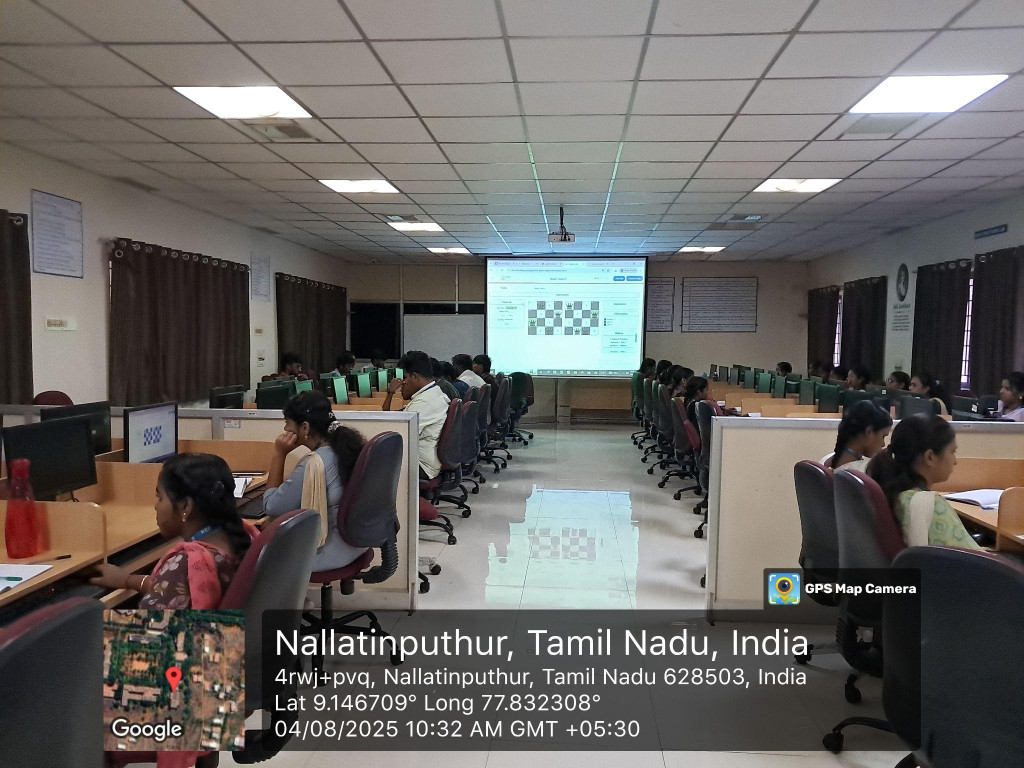
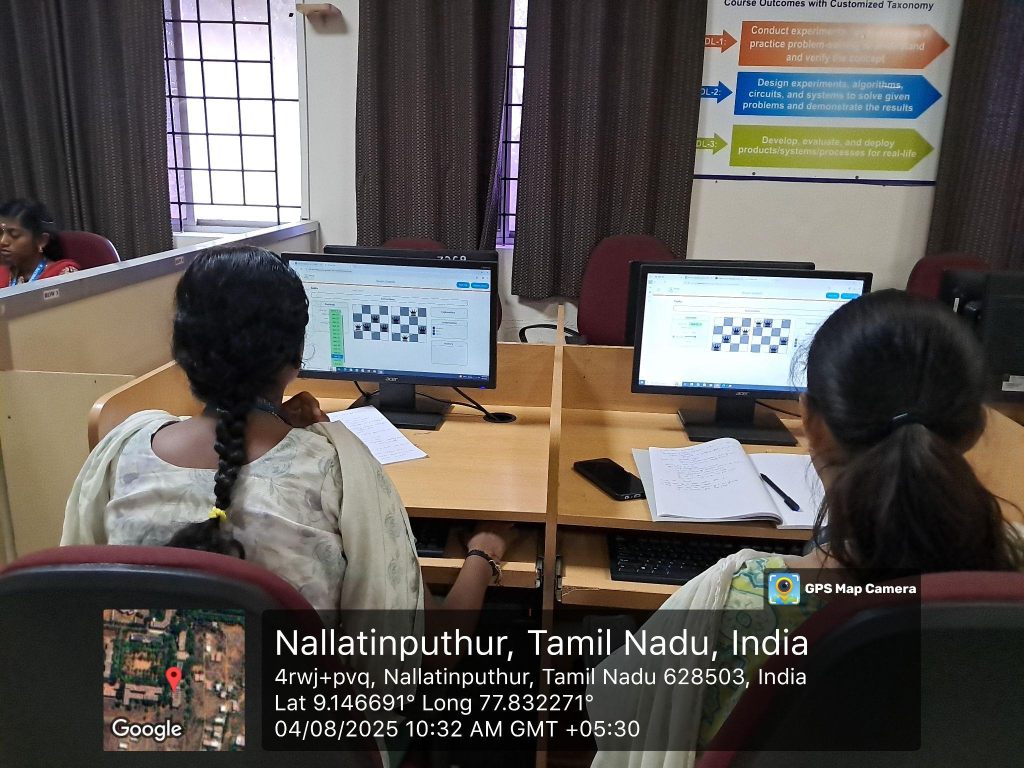
In this subject, the optimization technique Local beam search was taught with the help of Vlabs simulation software. The students were given demonstration with Vlabs simulation, where N-Queens problem was analyzed for better optimization results. The students performed analysis and learnt how the beam size and the initial random position converges faster to the better optimal solution by the simulation.
Content Available At : https://drive.google.com/file/d/1KJ4uZDhZnqGDkJkMwgQLLikcYQ2uZ7Kw/view?usp=sharing
Course Handled by :
Dr.V.Gomathi, Prof & Head/CSE, Ms.R.Navedha Evanjalin, AP/CSE, Ms.A.Lincy,AP/CSE, Ms.R.Suguna, AP/IT, Ms.C.Ajitha, AP/IT
End-to-End Journey: THE MODEL BATTLEGROUND: WHERE ALGORITHMS COMPETE
Subject Code and Name: 23IT61C & Machine Learning
Description of Activity:
The Model BattleGround: Where Algorithms Compete Machine Learning Hackathon is an innovative teaching-learning activity designed to provide students with hands-on exposure to real-world machine learning workflows. Conducted as a time-bound competitive event, the hackathon challenges student teams to work with raw datasets and independently identify meaningful problem statements relevant to practical applications.
Students collaboratively engage in the complete machine learning pipeline, including problem formulation, data preprocessing, feature engineering, model development and performance evaluation using appropriate metrics. The activity emphasizes critical thinking, rapid decision-making, and effective teamwork under constrained timelines, simulating industry-level hackathons.
Through structured phases, participants not only build and compare machine learning models but also present and justify their approaches before evaluators. This initiative bridges the gap between theoretical knowledge and practical implementation, enhancing students’ technical proficiency, analytical skills, and readiness for real-world data science and machine learning challenges.
Content Available At : https://drive.google.com/file/d/1PKiBupbsy9joh7YQL843WI8fnynpDcy4/view?usp=drive_link
Course Handled by : Dr.V.Anitha, AP(SG)/IT
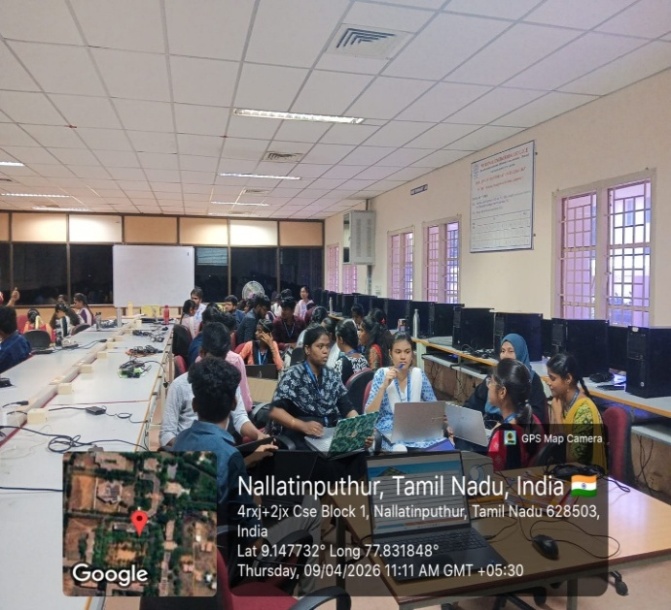
The concepts of cryptographic techniques were demonstrated using CrypTool software. This simulation-based approach provided a graphical representation of encryption and decryption methods like RSA, AES, and MD5. Students explored the algorithms interactively, which enhanced their understanding of theoretical concepts and practical applications.
Course Handled by:
Mrs. M. Malathi
Assistant Professor / IT
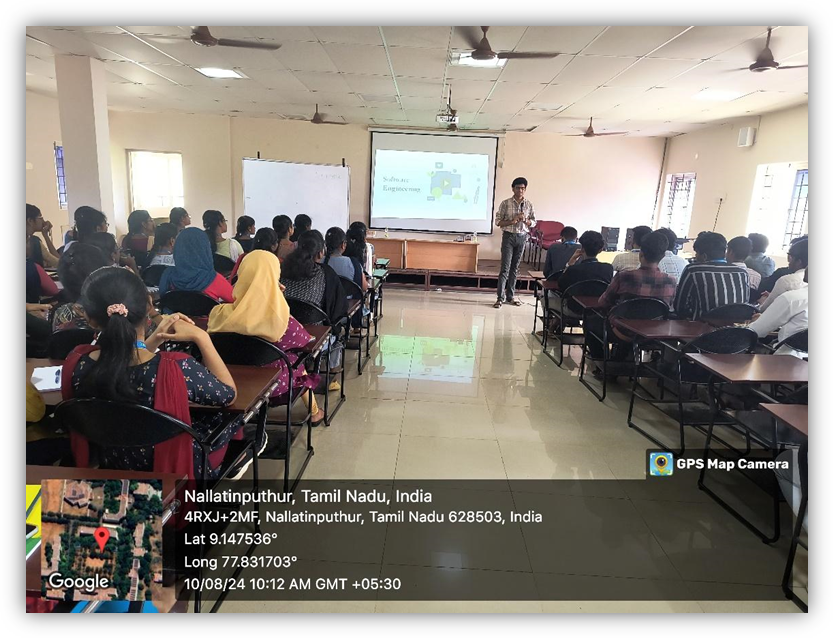
A guest lecture by Mr. Muthu Sundaram on SDLC models was delivered by an industry expert. The session included practical demonstrations of software development lifecycle stages, integrating real-world insights into theoretical learning. Students gained a deeper understanding of software engineering practices.
Content Available At:
https://drive.google.com/file/d/1F9jFzRL4LO5EVyEugG4-TXAV2b80DGW-/view?usp=drive_link
Course Handled by:
Mrs. R. Suguna, Assistant Professor / IT
Mrs. H. Ummu Sabura, Assistant Professor / IT
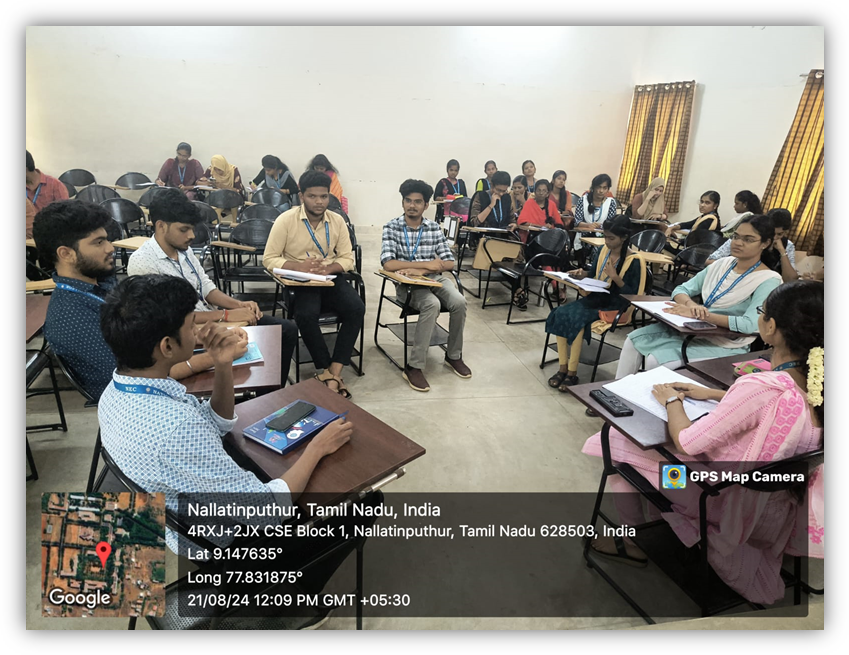
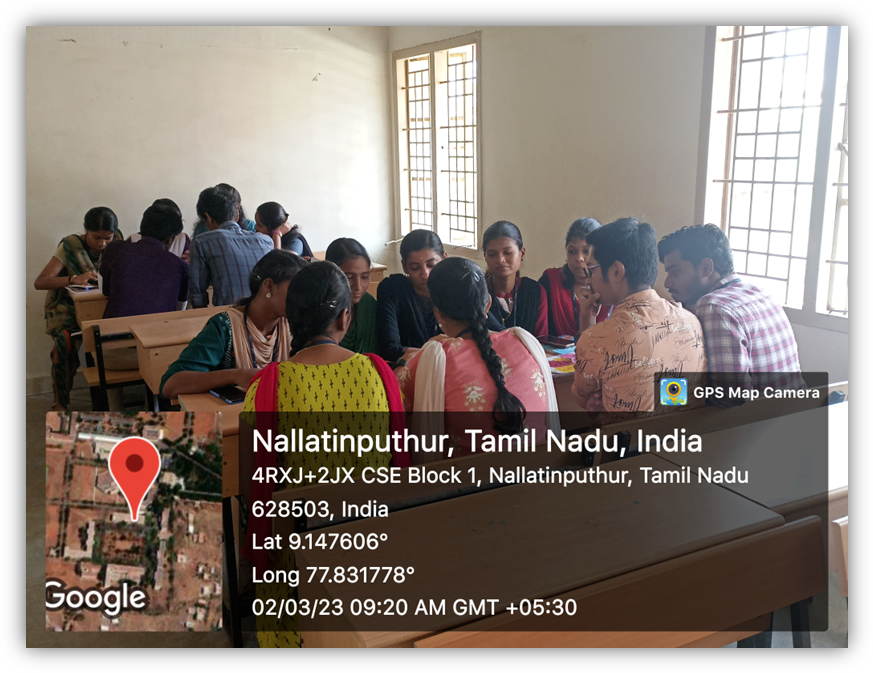
Students participated in a Jigsaw activity, analyzing case studies on the growth of Spotify, innovation of Netflix, and the success of Salesforce. This project-based approach fostered collaborative learning and helped students relate case studies to software development practices.
Course Handled by:
Mrs. R. Suguna, Assistant Professor / IT
Mrs. H. Ummu Sabura, Assistant Professor / IT
The Think-Pair-Share activity involved students exploring advanced machine learning concepts like Radial Basis Functions (RBF) through simulations. This helped students understand the mathematical properties and applications of RBF in real-world scenarios.
Course Handled by:
Ms. V. Anitha,
Assistant Professor (SG) / IT
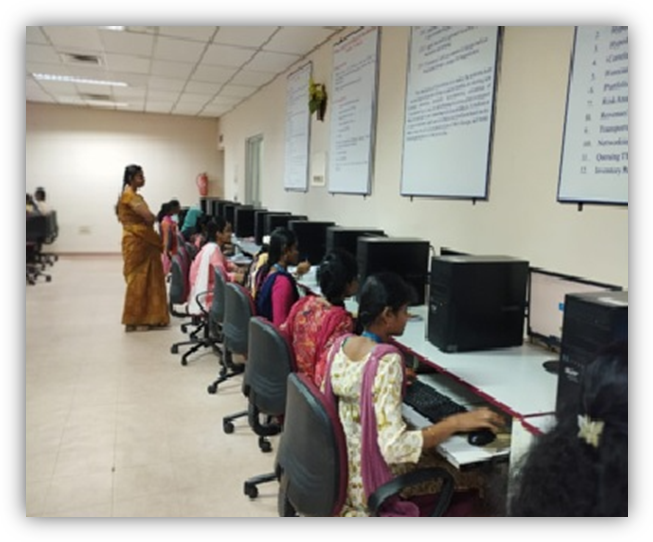
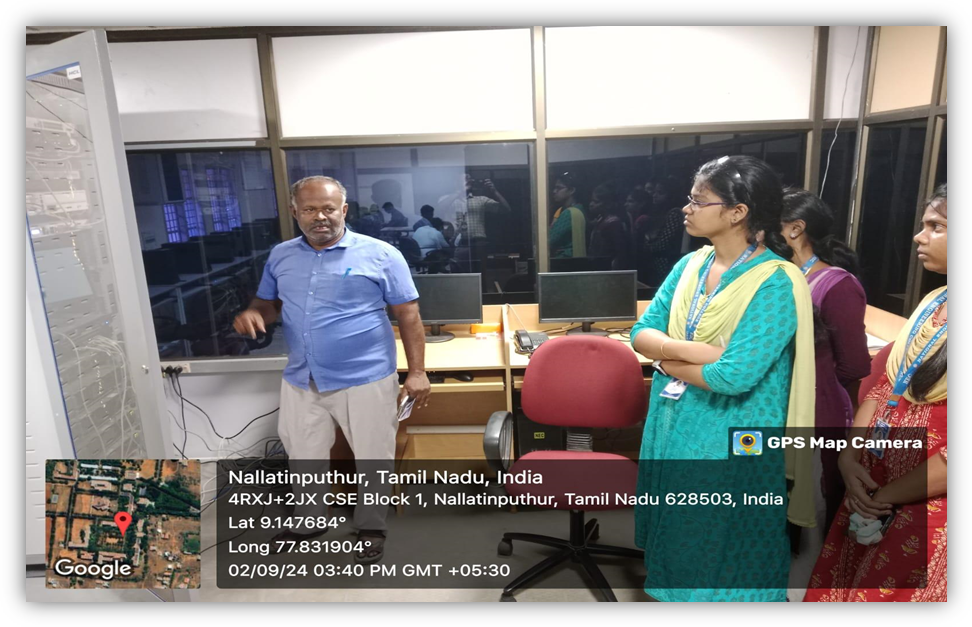
A network infrastructure visit provided students with real-world exposure to campus network topology and VLAN configurations. This hands-on activity bridged theoretical knowledge with practical applications, enhancing their understanding of network management.
Course Handled by:
Dr. S. Chidambaram
Associate Professor / IT
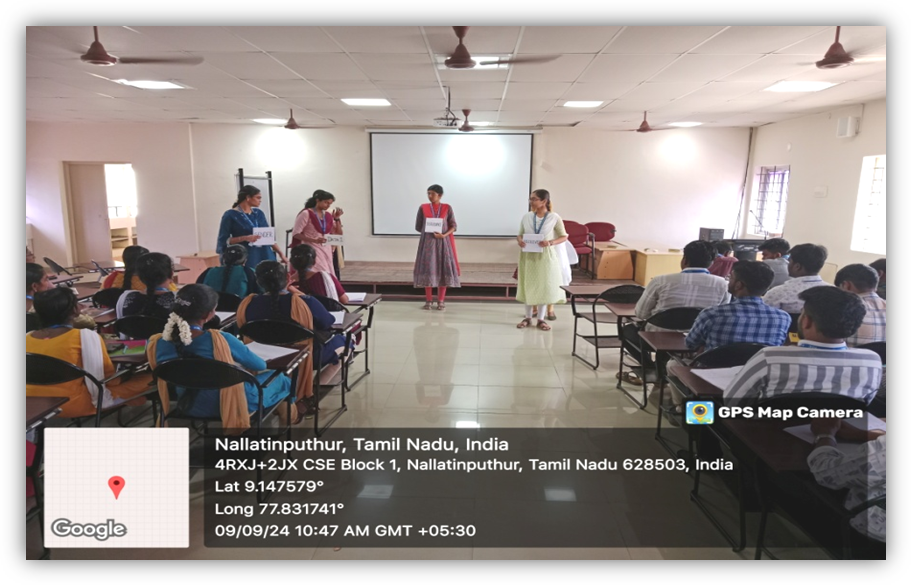
A role-play activity was conducted to demonstrate flow control techniques in computer networks. Students actively participated as senders, receivers, and data frames, illustrating protocols like Stop-and-Wait and Sliding Window through dynamic interaction.
Course Handled by:
Dr. S. Chidambaram
Associate Professor / IT
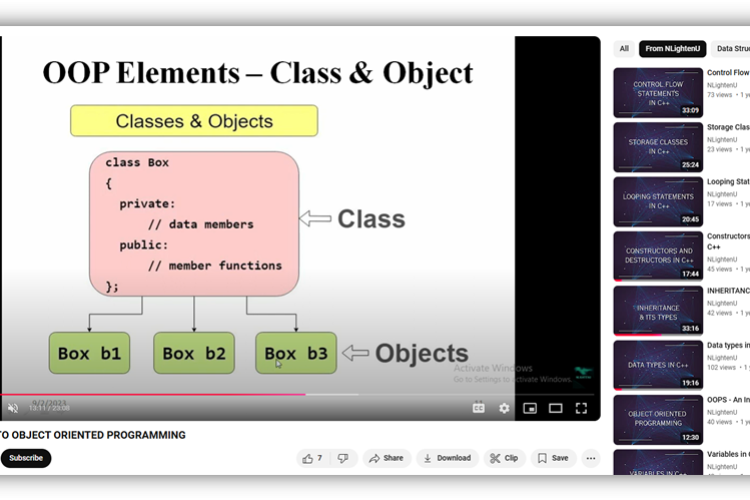
Delivering online lectures via a faculty YouTube channel is an innovative content delivery method that enhances accessibility and engagement by leveraging the platform’s global reach and asynchronous learning capabilities. This approach allows students to access high-quality, multimedia-rich lectures at their convenience, fostering self-paced learning.
Object-oriented programming concepts are discussed via the YouTube channel to provide students with additional clarity when needed. Learning through an online platform enables faculty to use engaging visuals, coding demonstrations, and real-world examples to simplify complex OOP principles like classes, objects, inheritance, and polymorphism.
Content Available At:
https://www.youtube.com/@NLightenU/videos?view=0&sort=dd&shelf_id=2
Course Handled by:
Ms. V. Anitha,
Assistant Professor (SG) / IT
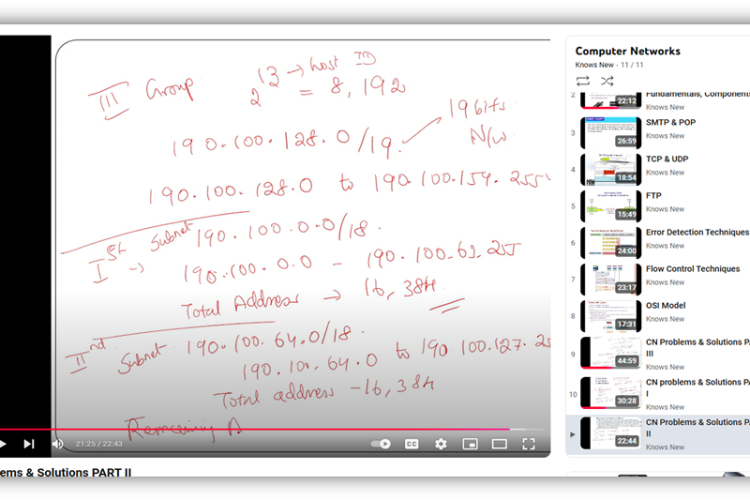
Faculty uses visuals, animations, and real-world examples to illustrate complex topics like
TCP/IP, routing, and network security, making them easier to grasp.
The platform’s asynchronous nature allows students to learn at their own pace, revisit key topics,
and engage in discussions through the comment section to resolve doubts.
Content Available At:
https://youtu.be/BOHE2T5R5Ho?si=hSO-jBFJUNAjk8dW
Course Handled by:
Dr. S. Chidambaram
Associate Professor / IT
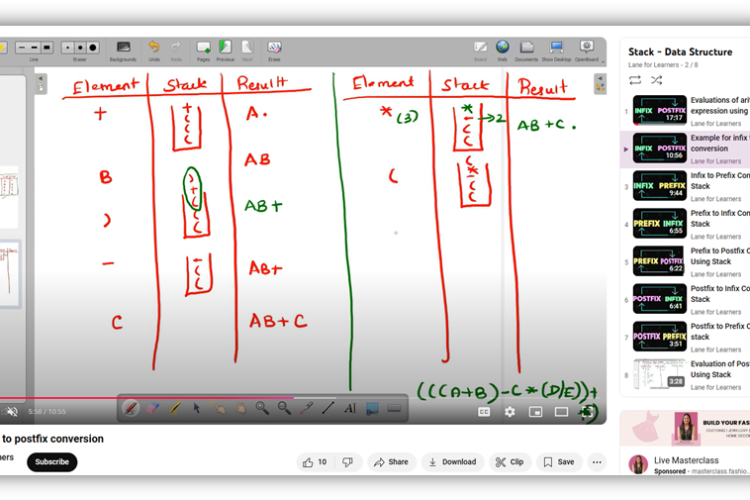
Delivering Data Structures lectures through a YouTube channel provides a flexible and engaging way to teach key topics like arrays, linked lists, stacks, queues, trees, and graphs. The asynchronous nature of YouTube enables students to learn at their own pace, revisit challenging topics, and interact through comments to clarify doubts.
Content Available At:
https://youtube.com/@laneforlearners?si=oZkkw3DrpZAQ_J6S
Course Handled by:
Mrs. N. Gowthami,
Assistant Professor / IT